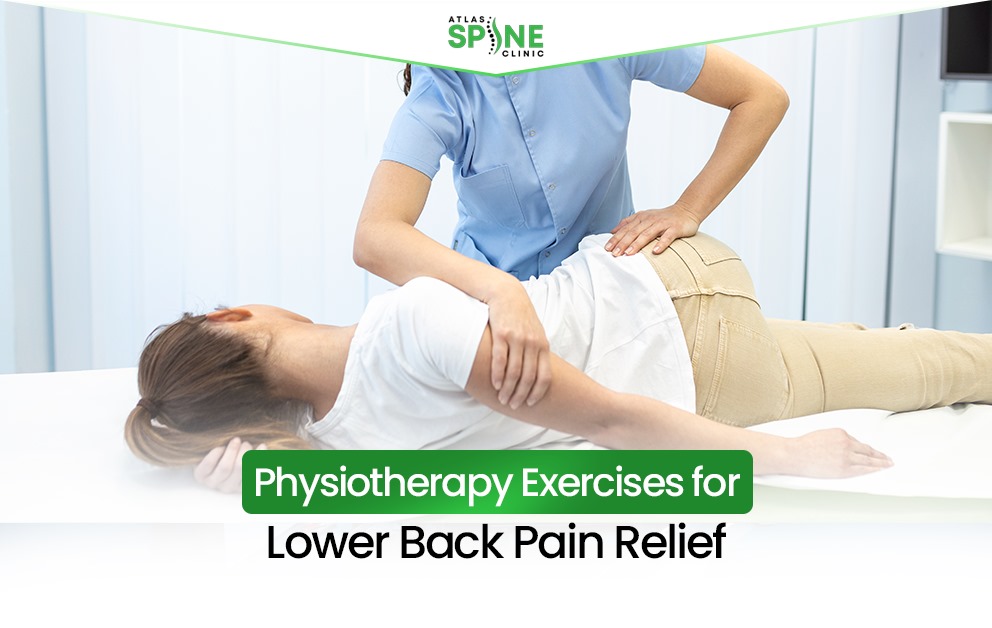
Lower back pain is one of the most common reasons people visit a physiotherapist — and for good reason. Whether it’s a dull ache after a long day at your desk, stiffness that greets you every morning, or pain that radiates down into your leg, the lower back is under constant strain. The encouraging news: the right physiotherapy exercises for lower back pain can make a meaningful difference.
At Atlas Spine Clinic in Scarborough, our physiotherapy team works with patients every day to address lower back pain through movement, education, and hands-on care. This guide walks you through 13 of the most effective physiotherapy exercises for the lower back — movements that improve flexibility, build strength, and help your spine function the way it’s meant to.
A note before you begin: These exercises are appropriate for most people with general lower back discomfort, but they’re not a substitute for a professional assessment. If your pain is severe, worsening, or accompanied by numbness or weakness in your legs, please book an appointment before starting any new exercise program.
Why Exercise Matters for Lower Back Pain
It might seem counterintuitive to move more when your back hurts, but research consistently shows that staying active — with the right movements — is one of the best things you can do for lower back pain. Prolonged rest can actually worsen outcomes by allowing muscles to weaken and stiffen further.
Physiotherapy exercises for lower back pain work by:
- Releasing tension in tight muscles that are pulling the spine out of alignment
- Improving mobility in joints that have become stiff from inactivity or overuse
- Strengthening the core — the deep abdominal and back muscles that support the spine
- Reducing nerve irritation by gently creating space in the lumbar joints
- Improving circulation to the discs and soft tissues that need nutrients to heal
Consistency matters more than intensity. Even 10–15 minutes of these movements done regularly can produce noticeable results over time. Research from the Mayo Clinic and other leading health organizations consistently supports active movement as a core strategy for lower back pain management. For additional clinical guidance, the Canadian Physiotherapy Association also provides evidence-based resources on lower back care.
The 13 Best Physiotherapy Exercises for Lower Back Pain
1. Knee-to-Chest Stretch
What it does: Elongates the lower back muscles and releases built-up tension in the lumbar spine.
How to do it: Lie on your back with your knees bent and feet flat on the floor. Gently pull one knee toward your chest using both hands and hold for 20–30 seconds. Feel the stretch through your lower back and glute on that side. Release and repeat on the other leg. For a deeper stretch, pull both knees in at the same time.
Sets/reps: 2–3 holds per side, holding 20–30 seconds each.
2. Knee Rotations (Windshield Wipers)
What it does: Improves spinal rotation and releases tension across the lower back and hips.
How to do it: Lie on your back with your knees bent and feet flat. Keeping your shoulders relaxed on the floor, slowly drop both knees together to one side as far as is comfortable. Hold briefly, then bring them back to centre and drop to the other side — like a windshield wiper motion.
Sets/reps: 10 repetitions per side, moving in a slow and controlled rhythm.
3. Back Extensions
What it does: Counteracts the effects of prolonged sitting and helps restore the natural inward curve of the lumbar spine.
How to do it: Lie face down with your hands placed beneath your shoulders. Slowly press your upper body upward, keeping your hips and pelvis relaxed on the ground. Hold at the top for a few seconds, then lower back down. If this position is uncomfortable, start with a gentler modification: rest on your forearms instead of pressing all the way up.
Sets/reps: 10 repetitions, moving slowly and breathing throughout.
4. Lower Back Rotation Stretch (Figure Four)
What it does: Stretches the piriformis, hip rotators, and lower back simultaneously — excellent for sciatic-type pain.
How to do it: Lie on your back and create a “figure four” by placing your right ankle across your left thigh. Gently pull your left leg toward your chest, which will bring your right leg along with it. You should feel a deep stretch through the outer hip and lower back on the right side. Hold, then switch sides.
Sets/reps: 2–3 holds per side, 20–30 seconds each.
5. Cat/Cow Stretch
What it does: One of the best all-round movements for spinal mobility — it gently mobilizes every segment of the spine and reduces stiffness.
How to do it: Start on your hands and knees with your wrists under your shoulders and knees under your hips. As you inhale, let your belly drop toward the floor and lift your head and tailbone (cow position). As you exhale, round your spine toward the ceiling, tucking your chin and tailbone (cat position). Move fluidly between the two.
Sets/reps: 10–15 repetitions, coordinating movement with your breath.
6. Child’s Pose
What it does: Gently decompresses the lower back and creates length through the entire spine. Especially helpful after sitting for long periods.
How to do it: From a kneeling position, sit your hips back toward your heels and extend both arms forward along the floor. Rest your forehead down and breathe deeply into your lower back. You should feel a gentle release through the lumbar spine and hips.
Sets/reps: Hold for 30–60 seconds. Repeat 2–3 times.
7. Foam Rolling (Mid-Back and Glutes)
What it does: Promotes blood flow, reduces muscle tension, and improves tissue flexibility throughout the back and hips.
How to do it: Place a foam roller under your mid-back (not your lower back — avoid rolling directly over the lumbar spine). Support your head with your hands and slowly roll up and down from your mid-back to your upper back. For the glutes, sit on the foam roller and shift your weight to one side, rolling slowly through the fleshy part of the glute.
Sets/reps: 30–60 seconds per area. Pause on tender spots and breathe through them.
Important: Tight glutes can directly contribute to lower back pain by pulling on the pelvis, so don’t skip the glute rolling. This is one of the most underrated physiotherapy exercises for lower back pain relief.
8. Pelvic Tilts
What it does: Strengthens the deep core muscles that stabilize the lumbar spine, and gently mobilizes the lower back.
How to do it: Lie on your back with your knees bent and feet flat on the floor. Tighten your abdominal muscles slightly and tilt your pelvis upward — flattening your lower back against the floor. Hold for 2–3 seconds, then release and allow the natural curve to return.
Sets/reps: 10–15 repetitions. This is a subtle movement — focus on engaging your core rather than lifting your hips high.

9. Spiky Ball Roll on Glutes
What it does: Targets deep tension in the glute muscles that often contributes to lower back and sciatic pain.
How to do it: Place a spiky massage ball (or firm tennis ball) on the floor and carefully sit on it, positioning it under one glute. Shift your weight gently and roll around the fleshy part of the glute, pausing on any tight or tender spots. Breathe through the discomfort — it should feel like a “good” pressure, not sharp pain.
Sets/reps: 30–60 seconds per side. Can be done daily.
10. Hip Flexor Stretch
What it does: Releases tension through the front of the hip, which — when tight — tilts the pelvis forward and increases lower back strain.
How to do it: Start in a low lunge position: one knee on the floor, the other foot forward with a 90-degree bend at the knee. Keep your torso upright and gently push your hips forward until you feel a stretch through the front of the hip and upper thigh of the back leg. Squeeze your glute on the kneeling side to deepen the stretch.
Sets/reps: Hold 30 seconds per side. Repeat 2–3 times.
Why this matters: If you sit at a desk for most of the day, your hip flexors are almost certainly tight. This stretch is one of the most impactful physiotherapy exercises for lower back pain — addressing the root cause rather than just the symptoms.
11. Piriformis Stretch
What it does: Targets the piriformis muscle deep in the glute — a common contributor to sciatic nerve irritation.
How to do it: Sit on the floor with both legs in front of you. Cross your right ankle over your left knee, creating a figure-four shape. Sit tall and lean gently forward from the hips (not the lower back) until you feel a deep stretch in the right glute and hip. Hold, then switch sides.
Sets/reps: 2–3 holds per side, 20–30 seconds each.
12. Thread the Needle
What it does: Gently stretches the spine, shoulders, and upper back — releasing rotation restrictions that can contribute to lower back compensations.
How to do it: Start on your hands and knees. Slide your right arm under your left arm along the floor, allowing your right shoulder and the side of your head to rest on the ground. Your left arm can stay extended or rest behind your back. You’ll feel a gentle twist through your mid and upper back.
Sets/reps: Hold 30 seconds per side. Repeat 2–3 times.
13. Hamstring Stretch
What it does: Tight hamstrings pull on the sitting bones and increase the load on the lower back. This stretch directly reduces that tension.
How to do it: Lie on your back with one knee bent and foot flat. Lift the other leg as straight as possible, using a towel, strap, or exercise band looped around the foot for support. Hold the stretch without forcing the leg further than is comfortable.
Sets/reps: 2–3 holds per side, 20–30 seconds each.
Tips for Getting the Most Out of These Physiotherapy Exercises for Lower Back Pain
Be consistent, not intense. Doing these movements gently every day will outperform an aggressive session once a week. Aim for 10–15 minutes daily.
Breathe through the stretches. Holding your breath increases muscle tension. Slow, relaxed breathing helps your muscles release more effectively.
Stop if pain sharpens or radiates. A gentle stretch sensation is normal and expected. Sharp pain, or pain that travels down your leg, is a signal to stop and seek professional guidance.
Warm up first. Even a short walk or some gentle movement before stretching improves results and reduces the risk of irritation.
Pair exercise with good daily habits. Watch your sitting posture, take regular movement breaks if you work at a desk, and pay attention to how you lift heavy objects.
When Physiotherapy Exercises for Lower Back Pain Aren’t Enough
These exercises are highly effective for managing and preventing lower back pain, but there are situations where professional care is necessary. Consider booking an appointment at Atlas Spine Clinic if:
- Your pain has lasted more than 2–3 weeks without improvement
- Pain is radiating into your buttock, leg, or foot
- You’re experiencing numbness, tingling, or weakness in your lower body
- Your pain started after a specific injury or accident
- You’re unsure which exercises are safe for your condition
Our Scarborough physiotherapy team will assess the root cause of your pain and create a personalized treatment plan — combining hands-on therapy with targeted exercise to get you back to the activities you love.
Frequently Asked Questions
How long before I see results from physiotherapy exercises?
Many people notice some improvement within 1–2 weeks of consistent practice. For more significant or chronic pain, meaningful progress typically comes after 4–6 weeks of regular exercise combined with professional treatment.
Can I do these exercises if my pain is acute?
Gentle movements like knee-to-chest stretches, pelvic tilts, and cat/cow are generally safe even during a flare-up. Avoid anything that significantly increases your pain. When in doubt, check with a physiotherapist first.
Are these exercises a replacement for physiotherapy treatment?
They’re a valuable complement to treatment, not a replacement. A physiotherapist can identify exactly which structures are involved in your pain and guide you to the exercises most beneficial for your specific situation.
How often should I do these exercises?
Daily is ideal for most people dealing with lower back pain. Once you’ve improved, several times per week is a good maintenance schedule.
Physiotherapy Exercises for Lower Back Pain: Book Your Appointment in Scarborough
You don’t have to manage lower back pain on your own. At Atlas Spine Clinic, our physiotherapy team combines expert assessment with personalized exercise plans and hands-on treatment to help you get lasting relief.
Whether your pain is recent or has been bothering you for years, we’re ready to help you move better and feel better.
Call us today to book your appointment: (647) 794-6868
Atlas Spine Clinic is located in Scarborough and is welcoming new patients. Same-week appointments are often available.
