Chronic lower back pain, sciatica, and herniated discs are among the most common reasons people visit a spine clinic — and also among the most frustrating conditions to live with. When rest, stretching, and pain medication are not enough, many patients want a non-surgical path to relief that actually addresses the source of the problem. That is where lumbar decompression therapy comes in.
Lumbar decompression therapy is exactly that. It is a safe, non-invasive, clinically supported treatment that directly targets the compressed spinal structures causing your pain. Here is everything you need to know.
What Is Lumbar Decompression Therapy?
Your lumbar spine (lower back) is made up of five vertebrae stacked on top of each other, separated by shock-absorbing discs. These discs can become compressed over time through poor posture, repetitive strain, injury, or simple aging — causing them to bulge, herniate, or degenerate. When a disc presses on a nearby nerve root, it produces the shooting pain, tingling, numbness, and weakness that many patients describe.
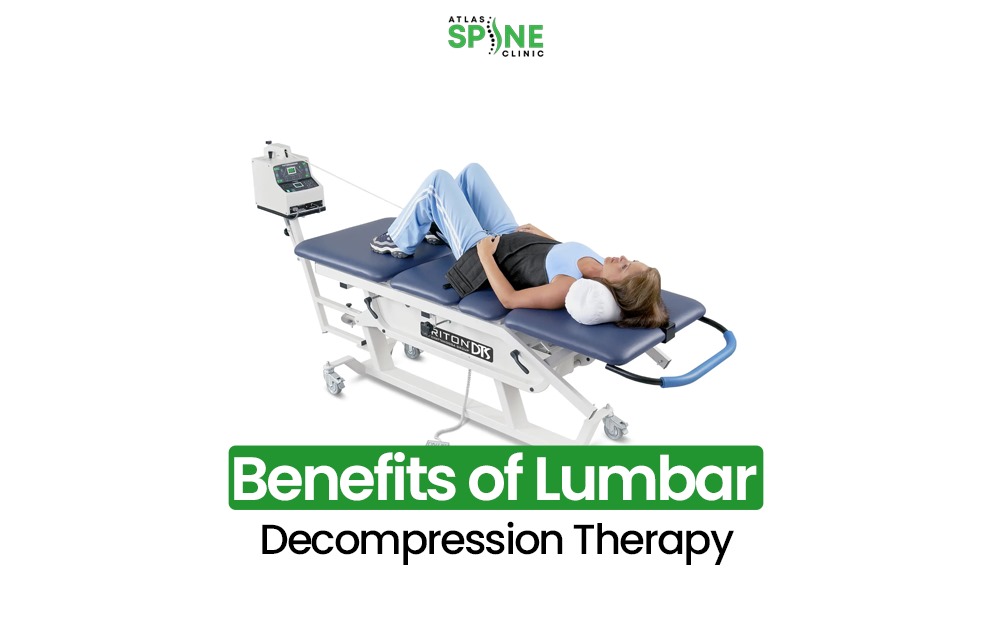
Lumbar decompression therapy is a non-surgical method that gently and precisely stretches the spine using a specialized motorized table. This controlled traction creates negative intradiscal pressure — essentially a gentle vacuum effect — that encourages bulging or herniated disc material to retract away from the nerve. At the same time, the negative pressure draws in oxygen, water, and nutrients that the disc needs to heal.
Think of the spine as a stack of sponges. Compression squeezes the fluid out; decompression creates the conditions for that fluid to be drawn back in, restoring disc height and reducing nerve irritation.
How Does Lumbar Decompression Therapy Work?
The therapy is delivered using a computer-controlled decompression table programmed to apply a precise, intermittent stretching force. The intermittent (cyclic) nature of the pull is important — it prevents the muscles from reflexively guarding and tensing up, which would counteract the therapeutic effect.
The process works through three key mechanisms:
- Reducing intradiscal pressure — Negative pressure encourages herniated or bulging disc material to retract, relieving nerve compression.
- Restoring disc nutrition — Compressed discs lose their ability to absorb the fluid and nutrients they need. Decompression restores this exchange, supporting tissue repair.
- Reducing facet joint loading — The traction also unloads the small joints of the lumbar spine, reducing inflammation and stiffness in patients with facet-related pain and spinal stenosis.
A clinical study published in the Journal of Neurological Research found that nonsurgical spinal decompression therapy produced significantly greater improvement in leg pain and functional status compared to a control group, with MRI-confirmed shrinkage of herniated disc volume by nearly 30%.
Conditions Treated with Lumbar Decompression Therapy
Lumbar decompression is effective for a range of lower back and nerve-related conditions:
Herniated or Bulging Discs
When disc material protrudes and presses on a nerve, it causes local back pain as well as radiating symptoms into the buttocks, legs, or feet. Decompression directly targets the compressed disc and is one of the most well-supported non-surgical options for this condition.
Sciatica
Sciatica is not a diagnosis in itself — it is a symptom of nerve compression, most commonly caused by a herniated disc or spinal stenosis at the lumbar level. According to Mayo Clinic, sciatica affects up to 40% of people at some point in their lives. Decompression reduces the pressure on the sciatic nerve, alleviating the sharp, burning, or shooting pain that travels down the leg.
Degenerative Disc Disease
As discs lose height and hydration over time, the space between vertebrae narrows, increasing load on the surrounding joints and nerves. Decompression helps restore disc height and reduce associated pain.
Spinal Stenosis
Stenosis refers to narrowing of the spinal canal, which can compress the nerves passing through it. Decompression creates temporary space within the canal and reduces the nerve irritation causing leg heaviness, cramping, and pain when walking.
Chronic Lower Back Pain
For patients with persistent lower back pain that has not responded adequately to physiotherapy exercises, massage, or medication, decompression offers an alternative mechanism of treatment that targets the structural contributors to pain.
Facet Syndrome
Irritation of the small facet joints in the lumbar spine — commonly from arthritis or overloading — responds well to the unloading effect of lumbar decompression therapy.
Benefits of Lumbar Decompression Therapy
- Non-surgical and non-invasive — No incisions, no anesthesia, no hospital stay, and no lengthy recovery period
- Directly addresses the source — Rather than masking pain, it targets the disc or nerve compression causing it
- Clinically supported — Research demonstrates measurable reductions in disc herniation volume and improvements in pain and function
- Comfortable treatment experience — Most patients find the sessions relaxing; there is no sharp discomfort involved
- Can reduce medication reliance — As pain decreases, many patients are able to reduce their use of anti-inflammatory or pain medications
- Complements other treatments — Works well alongside chiropractic adjustments, physiotherapy, and targeted exercise
- Suitable for patients who want to avoid surgery — An important option for those who have been told surgery may be needed but wish to explore conservative care first
Who Is a Good Candidate for Lumbar Decompression?
Lumbar decompression is appropriate for most adults experiencing lower back or leg pain from disc-related or nerve-related causes. Ideal candidates include those with:
- Herniated or bulging discs (confirmed or suspected)
- Sciatica or radiating leg pain
- Degenerative disc disease
- Spinal stenosis
- Facet syndrome
- Chronic lower back pain that has not fully resolved with other conservative treatments
Lumbar decompression is generally not recommended for:
- Pregnant women
- Patients with severe osteoporosis
- Those with spinal fractures, spinal tumors, or spinal instability
- Patients who have had spinal fusion surgery involving the affected levels
- Individuals with certain types of implanted hardware in the spine
A thorough assessment at Atlas Spine Clinic before starting treatment ensures you are an appropriate candidate and helps design the right protocol for your specific condition.

What to Expect During a Session at Atlas Spine Clinic
Your first appointment begins with a detailed assessment of your history, symptoms, posture, and movement. If decompression is recommended, your clinician will explain the treatment plan — including the number of sessions, the forces used, and what to expect throughout the course of care.
A typical decompression session looks like this:
- You lie comfortably on a specialized decompression table, either face up or face down depending on your condition and comfort
- A harness is fitted snugly around your hips and pelvis
- The computer-controlled system applies a precise, gentle, intermittent stretch to your lumbar spine
- The pulling and releasing cycles continue for the duration of the session — typically 20 to 30 minutes
- Most patients report feeling a gentle stretching sensation and find the treatment relaxing
There is no recovery time required after a session. You can return to light daily activities immediately, though your clinician may advise avoiding heavy lifting or intense activity on treatment days.
Treatment courses typically involve multiple sessions spread over several weeks. Improvement is usually gradual, with many patients noticing meaningful relief within the first several sessions. Consistency is important — attending all scheduled sessions produces the best outcomes.
Frequently Asked Questions
Is lumbar decompression therapy safe?
Yes. It is a non-surgical, non-invasive therapy with a strong safety profile. Unlike surgery, there is no risk of infection, complications from anesthesia, or surgical error. The computer-controlled system applies carefully calibrated forces, and the treatment can be stopped immediately if needed.
How soon will I feel results?
Some patients experience relief within the first few sessions; others notice gradual improvement over the course of the treatment plan. The timeline depends on the severity of your condition, how long you have had it, and your overall health. Your clinician will monitor your progress and adjust the plan as needed.
How many sessions will I need?
This varies based on your diagnosis and how your body responds. A typical course of treatment ranges from 12 to 20 sessions over several weeks. After your initial assessment, your clinician will recommend a specific plan.
Is it covered by insurance?
Coverage depends on your individual insurance plan. Many extended health benefits plans cover lumbar decompression therapy when provided by a chiropractor or physiotherapist. The team at Atlas Spine Clinic can assist with documentation and receipts to support your insurance claim.
Can I combine decompression with other treatments?
Absolutely — and it is often recommended. Decompression works well alongside chiropractic adjustments, physiotherapy, massage therapy, and rehabilitative exercise. A combined approach typically produces faster and more lasting results.
Will I need decompression therapy forever?
No. The goal of treatment is to create enough healing and structural improvement that your condition resolves or stabilizes. Many patients complete a course of treatment and do not require ongoing sessions, particularly when they also adopt supportive exercises and lifestyle changes.
Start Your Path to Lower Back Relief
Lumbar decompression therapy offers a clinically supported, non-surgical path to relief from herniated discs, sciatica, spinal stenosis, and chronic lower back pain. It is not a temporary fix — when combined with proper rehabilitation, it addresses the structural problem causing your symptoms.
At Atlas Spine Clinic in Scarborough, our team takes the time to understand your specific condition and build a treatment plan that is right for you. Whether decompression is the primary treatment or part of a broader care plan, we are committed to helping you move better and live without pain.
Call us at (647) 794-6868 or book your appointment online. We welcome patients from Scarborough, Toronto East, and throughout the Greater Toronto Area.
