
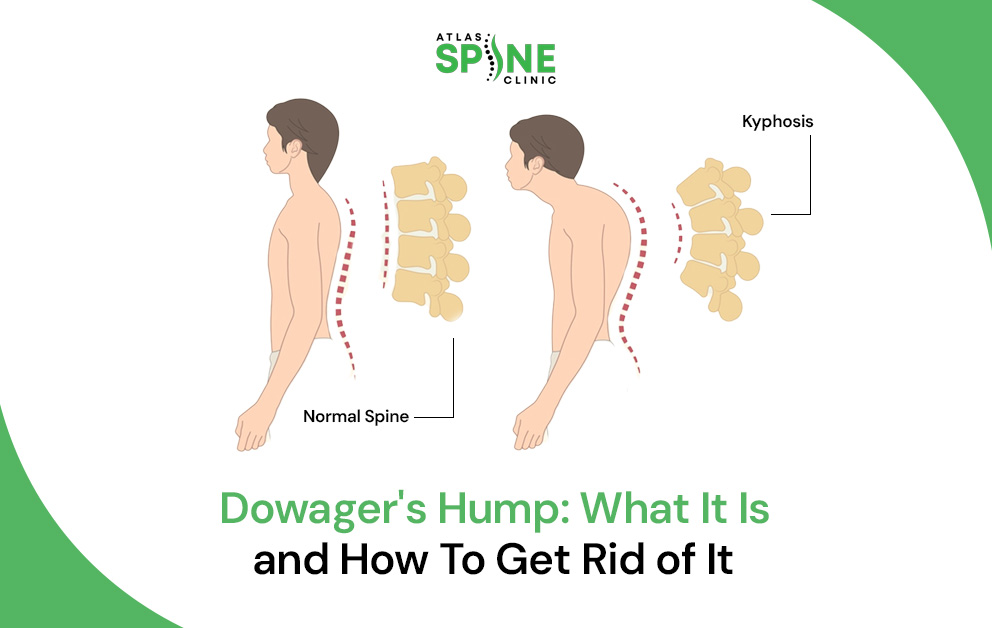
A dowager’s hump that rounded, hump-like protrusion at the base of the neck used to be seen as an inevitable part of aging. Today, it is showing up in teenagers, office workers, and anyone who spends hours each day looking down at a screen. If you have noticed a bump forming at the back of your neck, or if your shoulders have started rounding forward, you are not alone and it is not too late to address it.
This guide explains what a dowager’s hump is, what causes it, how to treat it at home, and when it is time to see a chiropractor or physiotherapist at a clinic like Atlas Spine Clinic in Scarborough.

What Is a Dowager’s Hump?
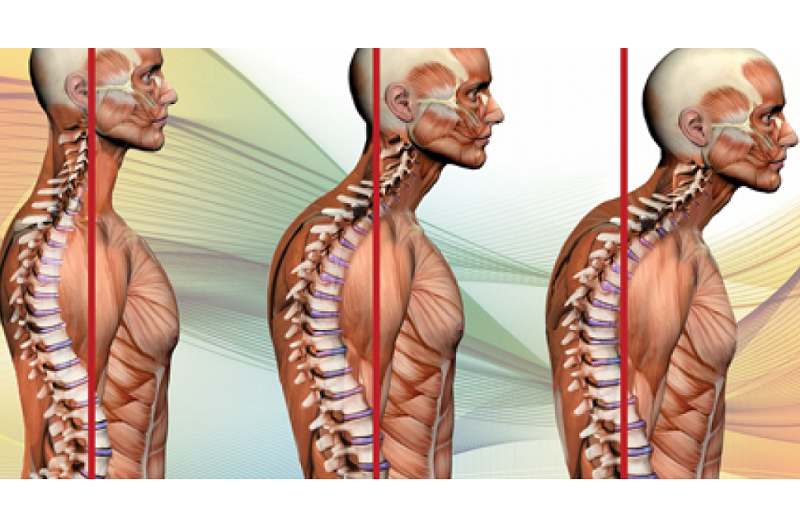
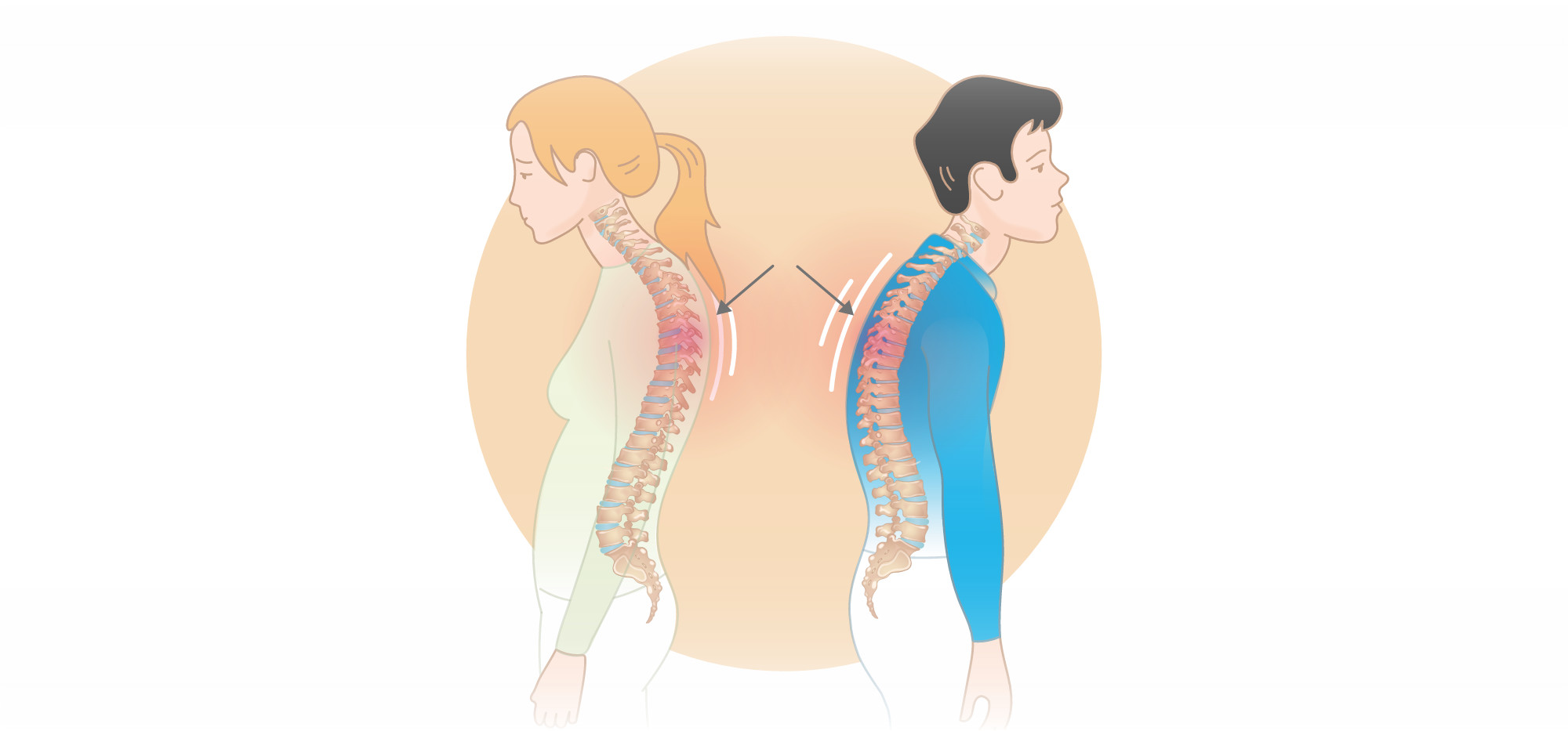
A dowager’s hump, clinically referred to as hyperkyphosis or cervicothoracic kyphosis, is a forward rounding of the upper spine that creates a visible bump at the junction between the neck and upper back. The head and neck shift forward, the shoulders round inward, and the upper thoracic spine develops an exaggerated curve.
While the nickname comes from its historic association with older women affected by osteoporosis, the condition now affects people of all ages and genders — driven largely by screen-based posture habits.
How Do You Know If You Have One?
Stand sideways in front of a mirror and look at the curve of your upper back and neck:
- Is there a rounded protrusion at the base of your neck?
- Does your head sit forward of your shoulders rather than directly above them?
- Do your shoulders roll inward?
You may also notice symptoms including:
- Stiffness or aching in the upper back and shoulders
- Neck tension and recurring headaches
- Reduced range of motion when turning your head
- A sensation of fatigue or heaviness in the neck and shoulders
- Difficulty standing fully upright for long periods
What Causes a Dowager’s Hump?
1. Chronic Poor Posture (“Tech Neck”)
The most common cause in younger adults is sustained forward head posture — looking down at phones, hunching over laptops, or slouching in office chairs for hours each day. Over time, the muscles and ligaments adapt to this position and the spine begins to hold the rounded shape even when you are not actively hunching.
2. Osteoporosis
Osteoporosis weakens bone density, particularly in post-menopausal women. Weakened vertebrae can develop small compression fractures that cause the spine to tilt forward, progressively deepening the curve. Prevention includes strength training, adequate calcium and vitamin D intake, and regular bone density screening for those at risk.
3. Degenerative Disc and Joint Changes
As we age, spinal discs lose height, joints stiffen, and ligaments begin to degenerate. These changes gradually increase the natural thoracic curve. Arthritis, prior injuries, and long-standing poor posture all accelerate this process.
4. Scheuermann’s Kyphosis
This structural condition occurs during adolescence when vertebral bodies develop a wedge shape instead of a rectangular one, creating a rigid rounded upper back. Unlike postural kyphosis, it cannot simply be corrected by “sitting up straight” — it requires proper medical evaluation and supervised treatment.
5. Congenital and Pathological Causes
In rarer cases, a hump can develop from spinal abnormalities present at birth, or from infections, tumours, or calcified ligaments that alter vertebral alignment. Sudden development of a hump accompanied by significant pain should always be evaluated by a healthcare provider.
How to Get Rid of a Dowager’s Hump
Treatment depends on severity and cause. For postural cases, a consistent home programme combined with professional care produces the best results.
1. Strengthen the Upper Back and Neck
Weakened upper back muscles allow the chest and neck muscles to pull the spine forward. Targeting these muscles directly creates the muscular balance needed to hold proper alignment.
Key exercises:
- Chin tucks: Gently draw your chin straight back (not up or down), creating a slight double chin. Hold five seconds, repeat ten times. This retrains the deep neck flexors and counteracts forward head posture.
- Scapular squeezes: Sit or stand tall and squeeze your shoulder blades together as if trying to hold a pencil between them. Hold five seconds, three sets of ten.
- Wall angels: Stand with your back flat against a wall, arms at 90 degrees. Slowly raise and lower your arms in a controlled “snow angel” motion, keeping your back, head, and arms in contact with the wall throughout.
- Prone Y and T raises: Lie face down on a mat and raise your arms into a Y shape, then a T shape, squeezing the upper back at the top of each movement.
2. Stretch the Chest, Shoulders, and Neck
Tight pectoral and neck muscles actively pull the spine into a rounded position. Daily stretching is non-negotiable.
Essential stretches:
- Doorway chest stretch: Stand in a doorway with arms at 90 degrees and gently lean forward until you feel a stretch across the chest. Hold 20–30 seconds.
- Upper back stretch: Clasp your hands in front of you and push your arms forward while rounding your upper back. Hold 20 seconds.
- Neck side stretch: Tilt your ear toward your shoulder and gently apply light pressure with your hand. Hold 20 seconds each side.
- Cat-cow stretch: On all fours, alternate between arching and rounding your spine slowly to improve thoracic mobility.
3. Correct Posture Throughout the Day
Exercises only work if your daily posture habits change alongside them. Think of your posture as something you actively maintain, not a fixed physical trait.
Practical adjustments:
- Raise your screen to eye level so your neck stays neutral
- Imagine a string gently pulling the crown of your head toward the ceiling
- Sit with feet flat, back supported, and shoulders relaxed — not pinched back
- Set a phone alarm every 30–60 minutes as a posture reset reminder
- If you work at a desk, invest in an ergonomic chair with proper lumbar and thoracic support
4. Improve Bone Health
For those with osteoporosis-related kyphosis, strengthening bone density is essential to prevent further vertebral compression.
- Aim for 1,000–1,200 mg of calcium daily from food or supplements
- Ensure adequate vitamin D (sunlight exposure or supplementation)
- Include weight-bearing exercises such as walking, resistance training, or yoga
- Ask your doctor about a bone density scan (DEXA scan) if you are over 50 or have risk factors
5. Maintain a Healthy Weight
Excess fat deposits around the upper back and neck can accentuate the appearance of a hump and add strain to the cervical and thoracic spine. A balanced, anti-inflammatory diet supports both body composition and spinal disc health.
When to See a Chiropractor or Physiotherapist
Many people try home exercises for weeks without meaningful improvement — often because the spinal joints themselves are restricted and cannot move properly, no matter how diligently you stretch.
You should book a professional assessment at a spine clinic if:
- The hump is visible and has been present for more than a few months
- You are experiencing persistent neck pain, headaches, or upper back stiffness
- Home exercises are not producing noticeable improvement after 4–6 weeks
- You have been diagnosed with osteoporosis or Scheuermann’s kyphosis
- The hump appeared quickly or is accompanied by unusual pain
What professional treatment looks like at Atlas Spine Clinic:
- Chiropractic adjustments to mobilize restricted thoracic and cervical joints, restore proper segmental movement, and reduce muscle guarding
- Physiotherapy targeting specific muscle imbalances, motor control, and movement retraining
- Custom exercise programming tailored to your current posture, strength deficits, and lifestyle
- Posture taping or bracing as a short-term aid while the muscles are being retrained
- Soft tissue therapy to release chronically tight chest, neck, and shoulder muscles
The earlier treatment begins, the better the outcome. Structural changes in the spine are progressive , catching the problem in the postural stage is far easier than addressing it after years of adaptation.
How to Prevent a Dowager’s Hump
Prevention is always more effective than correction. These habits protect your spine long-term:
- Keep your head aligned over your shoulders — not jutting forward
- Hold your phone at eye level instead of looking down at it
- Use a supportive pillow that keeps your neck neutral while you sleep (avoid stomach sleeping)
- Take regular movement breaks if you sit for work
- Perform 10–15 minutes of upper back strengthening and chest stretching daily
- Have your posture assessed professionally if you notice early changes
Frequently Asked Questions
Can a dowager’s hump be reversed?
Yes — in most postural cases, consistent treatment combining stretching, strengthening, chiropractic care, and improved daily habits can significantly reduce or eliminate the hump. The sooner treatment starts, the better the outcomes.
How long does it take to fix a dowager’s hump?
Results vary depending on severity and how long the condition has been present. Many patients notice meaningful improvement within 6–12 weeks of consistent treatment. Structural cases may take longer.
Is a dowager’s hump the same as kyphosis?
A dowager’s hump is a specific presentation of hyperkyphosis — an excessive rounding of the thoracic and cervicothoracic spine. Kyphosis is the broader medical term for any exaggerated forward curve of the spine.
Is it painful?
Not always. Some people have a visible hump with minimal pain; others experience significant neck, shoulder, and upper back discomfort. Headaches are also common due to the strain on the cervical spine.
Can it come back after treatment?
It can recur if the underlying postural habits are not changed. Long-term success depends on maintaining the exercise habits and ergonomic improvements learned during treatment.
Does it only affect older women?
No. While historically associated with post-menopausal women due to osteoporosis, dowager’s hump now increasingly affects younger adults and even teenagers as a result of prolonged device use and sedentary lifestyles.
Take the First Step Toward a Straighter Spine
Dowager’s hump is a condition that responds well to the right combination of professional care and consistent home effort. It is not something you simply have to live with.
At Atlas Spine Clinic in Scarborough, our team of chiropractors and physiotherapists assesses the root cause of your postural imbalance and builds a personalized plan to address it, from joint mobilization and soft tissue work to targeted exercise programming and ergonomic coaching.
If you are ready to address your posture and find lasting relief, call us at (647) 794-6868 or book your appointment online at atlasspineclinic.ca. We serve patients throughout Scarborough and the surrounding GTA.