Acupuncture in Scarborough: What It Treats and What to Expect
If you are dealing with stubborn pain and want a drug-free, non-invasive option, acupuncture is one of the most effective tools we use at our Scarborough clinic, and one of the most misunderstood. People picture mysticism or painful needles, when the reality is gentle, relaxing, and grounded in real physiology. Here is what acupuncture actually treats, what a session feels like, how electro-acupuncture differs, and what it costs.
What does acupuncture treat?
At Atlas Spine Clinic, acupuncture is used mainly as a pain and recovery tool, which fits our focus as a spine and musculoskeletal practice. The most common reasons people come in for it are:
- Lower back pain
- Neck and shoulder pain
- Sciatica and nerve-related pain
- Tension headaches and migraines
- Muscle tightness and spasm
- Sports injuries
- The stress and tension that often ride along with chronic pain
It works by stimulating your body to release its own natural painkillers, endorphins, while improving circulation and helping tight, irritated tissue settle down. Because we also offer fire cupping and have practitioners trained in traditional Chinese medicine, acupuncture is often combined with other hands-on care like chiropractic, physiotherapy, and massage rather than used in isolation.
Regular acupuncture vs electro-acupuncture
The simplest way to understand the difference is the addition of gentle electrical stimulation. With traditional acupuncture, fine needles are placed at specific points and left to do their work. With electro-acupuncture, a mild, low-level electrical current is passed between pairs of those needles, giving steadier, stronger, more continuous stimulation. Most people feel a light tapping or tingling sensation, and it is generally very tolerable.
Which one we use comes down to the problem. Regular acupuncture is a great fit for general pain, stress, tension, and for people who are needle-sensitive or new to it and want something gentler. Electro-acupuncture tends to be the choice for more stubborn or chronic pain, deeper muscle and nerve involvement, and cases like persistent sciatica or muscle weakness, where that stronger, sustained stimulation can be more effective. The practitioner decides based on your assessment and how your body responds.
What to expect in a session
A typical visit starts with a short check-in about how you are feeling and where your pain is sitting that day, so the treatment can be targeted. Sessions run about 30, 45, or 60 minutes depending on what you book, and your first visit usually includes a proper assessment.
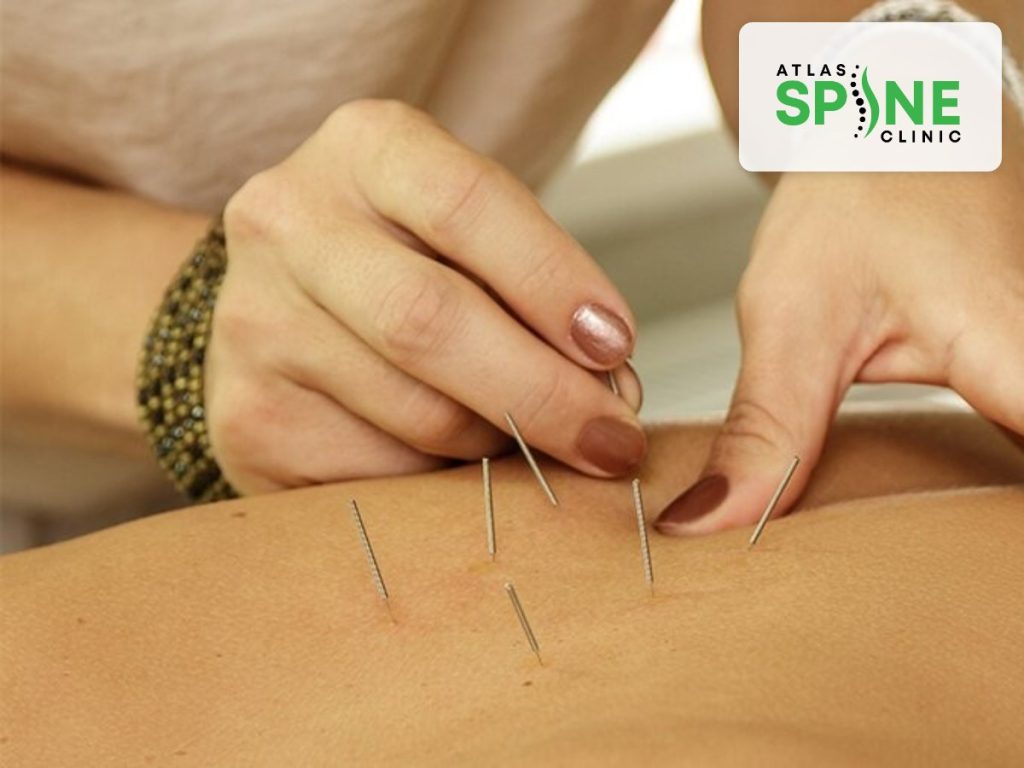
For the treatment, you lie down comfortably, and the practitioner places fine, sterile, single-use needles at specific points, often somewhere in the range of six to fifteen, though it varies. These needles are far thinner than the ones used for injections, so insertion is usually painless or feels like a tiny pinch. Once they are in, you might feel a dull ache, warmth, heaviness, or light tingling around the points, which is normal and a sign the area is responding. If electro-acupuncture is used, small clips add a gentle pulsing current between some needles.
Then you rest. The needles stay in place for roughly fifteen to thirty minutes while you relax, and many people find this part genuinely calming, some even doze off. Afterward the needles come out quickly and painlessly. Most people feel relaxed and looser, though it is normal to feel a little tired or lightly sore for the rest of the day, so drinking water and taking it easy helps.
How many sessions will you need?
It depends on whether the issue is recent or long-standing. Many people feel some relief after the first one or two sessions, but for lasting change with chronic pain, a course of around six to eight sessions, often once or twice a week to start, tends to work best. As things improve, visits are spaced further apart. The practitioner re-checks your progress along the way and adjusts the plan, and acute issues usually need fewer sessions than chronic ones.
Common misconceptions about acupuncture
“It will hurt.” This is the big one. Acupuncture needles are about the width of a hair, nothing like injection needles. Most people barely feel them go in, and the usual sensation is a mild dull ache, warmth, or tingling, not sharp pain. Most patients are surprised by how relaxing it is.
“It is just woo with no real basis.” There is a solid physiological explanation: the needles stimulate the nervous system to release the body’s own natural painkillers and improve circulation. That is why a pain and spine clinic uses it as a practical tool, not a mystical one.
“It only works for one thing” (or “it cures everything”). The honest middle ground: it is genuinely effective for musculoskeletal and nerve-related pain, headaches, muscle tension, and stress, but it is not right for every condition. Part of the assessment is being upfront about whether it will help you.
“One session should fix everything.” Some people feel relief right away, but lasting change with chronic issues usually comes from a short course that builds on each session. Stopping after one because it was not a miracle sells it short.
What our patients say
Bohdan, an electrician whose job puts constant strain on his body, came in for right knee and lower back pain. Dr. Arvin treated him with a combination of techniques including electro-acupuncture along with manual work on the joints and tissues, and Bohdan said it genuinely improved his problem areas, finishing with a strong recommendation. Another patient, Imran, was treated by Dr. Farshad for acupuncture and praised how the clinic targets the source of the pain rather than giving generic treatment.
(The following is a representative example, not a specific patient.) A woman in her late thirties came in with stubborn sciatica, a burning pain running from her lower back down one leg that had dragged on for months despite rest and painkillers. She was openly skeptical and only tried acupuncture because nothing else had worked. After an assessment, the practitioner used electro-acupuncture along the affected area to calm the irritated nerve, combined with the clinic’s other hands-on care. She felt looser after the first couple of sessions, and by around the sixth the leg pain had dropped dramatically and she could sit and sleep normally again. Her takeaway: she wished she had not waited so long out of doubt.
How much does acupuncture cost in Scarborough?
At Atlas Spine Clinic, acupuncture is priced by session length: $75 for 30 minutes, $100 for 45 minutes, and $120 for 60 minutes (the same rates also cover fire cupping). Your first visit usually includes an assessment so the practitioner can tailor the treatment.
Many extended health plans cover acupuncture, though it depends on your specific plan and whether acupuncture is included in your benefits. We offer insurance direct billing where your plan allows, so you would only cover any portion your plan does not. Coverage can also depend on the practitioner’s designation, so the most accurate move is to check your plan details with us, and we can verify your benefits and help with receipts. You can also see our full price list.
Frequently asked questions
Does acupuncture hurt?
Not the way people fear. The needles are about the width of a hair, so insertion is usually painless or feels like a tiny pinch. The typical sensation is a mild dull ache, warmth, or tingling, and most people find the session deeply relaxing.
What does acupuncture treat?
We use it most for musculoskeletal and nerve pain, lower back pain, neck and shoulder pain, sciatica, tension headaches, muscle tightness, sports injuries, and the stress that comes with chronic pain.
How many sessions will I need?
Many people feel some relief after one or two sessions. For lasting change with chronic pain, a course of about six to eight sessions, once or twice a week to start, usually works best, then spaced out as you improve.
Is acupuncture covered by insurance?
Often yes, many extended health plans include acupuncture, though it depends on your plan. We offer direct billing where your plan allows, and we can help verify your benefits.
Book acupuncture in Scarborough
If you are dealing with pain and want a gentle, drug-free option, acupuncture is worth a proper try, on its own or alongside chiropractic, physiotherapy, or massage. The best first step is a quick assessment to confirm it suits your situation. Call us at (647) 794-6868 or book online to get started. Atlas Spine Clinic is located inside Pharmasave at 21 Glendinning Ave, Scarborough (Toronto), ON M1W 3E2. Hours are Monday, Tuesday, and Thursday 11am to 8pm, Friday 2pm to 8pm, and Saturday 10am to 4pm (closed Wednesday and Sunday).
