
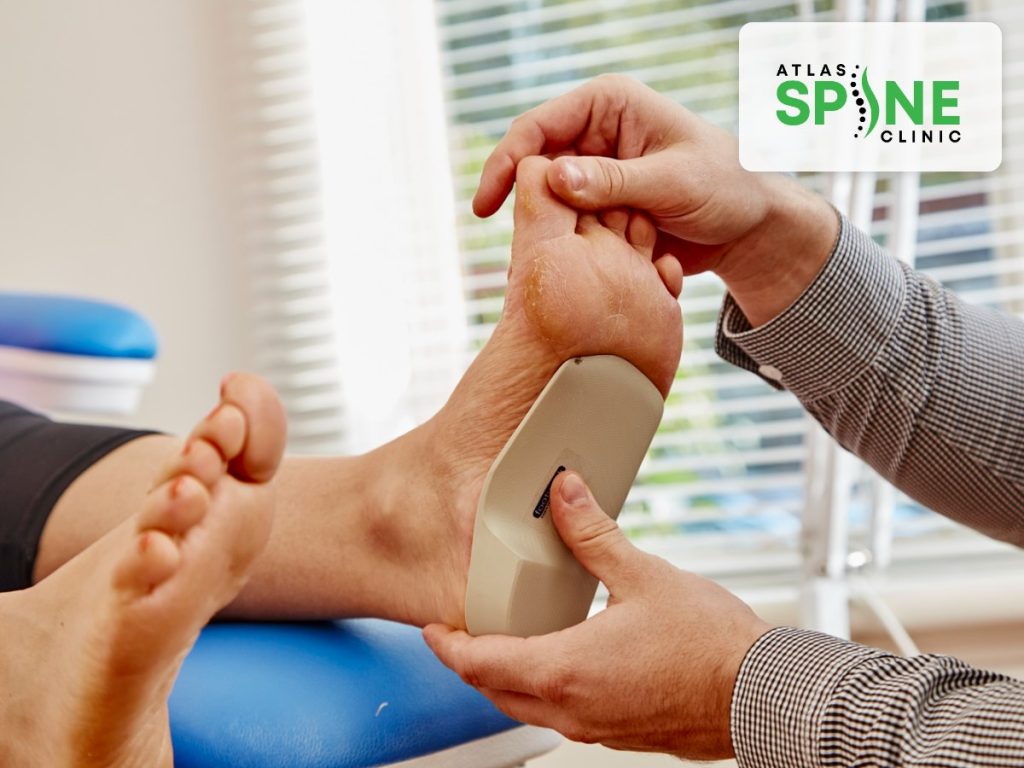
If your first few steps out of bed feel like stepping on a stone or a bruise under your heel, and then it eases off once you get moving, there is a good chance you are dealing with plantar fasciitis. It is one of the most common causes of heel pain we see, and the good news is that it responds very well to the right treatment. The catch is that “the right treatment” depends on getting the diagnosis and the cause right first. Here is how we approach plantar fasciitis in Scarborough at Atlas Spine Clinic, from figuring out what is actually going on to fixing it so it does not keep coming back.
How we know it is plantar fasciitis and not something else
The first thing we do is listen, because heel pain has a few common culprits and each one tells a slightly different story. With plantar fasciitis, the classic giveaway is pain on the underside of the heel that is at its worst with the very first steps in the morning or after sitting for a while, then eases a bit once you get moving. The tenderness is usually right where the fascia attaches on the bottom of the heel and into the arch. A big part of figuring this out is just the history: when it hurts, where it hurts, and what makes it better or worse, because that pattern points us in the right direction before we ever touch the foot.
From there we compare it to the things people often confuse it with. A heel spur shows up in a similar spot, but a spur is really an X ray finding rather than the pain source itself, since plenty of people have spurs and no pain, so we treat the fascia and the mechanics, not the spur. Achilles tendinitis lives at the back of the heel and lower calf rather than underneath, and it tends to hurt with push off, going up on the toes, or climbing stairs. A nerve issue feels different again, more burning, tingling, or numbness, and it can be referred from the lower back, which is why we keep that on the radar too.
The hands on assessment is where we confirm it. Your practitioner palpates the specific painful points to pinpoint whether it is the fascia, the Achilles, or somewhere else, and runs simple tests like loading the fascia by bending the toes back, checking calf flexibility and ankle motion, and testing strength. We also look at how you stand and walk, because the way your foot loads, your arch, and your gait often reveal what is overloading the tissue in the first place. If something points to a nerve, we screen the lower back and the nerve path as well. The reason we go to this trouble is simple: plantar fasciitis, Achilles tendinopathy, and a nerve problem each respond to different treatment, so getting the cause right is what lets us actually fix it rather than just chasing the sore spot.
How we treat plantar fasciitis at Atlas
Once we have confirmed it is plantar fasciitis, the plan usually works on two fronts at once: calming down the angry tissue and fixing what overloaded it in the first place. Early on the priority is settling the pain, so we often start with hands on soft tissue work to release the tight fascia and calf, and we may use modalities like ultrasound or laser to help the tissue recover. Alongside that we get you moving the right way with a targeted exercise plan, which for plantar fasciitis really matters: calf and fascia stretching, progressive strengthening for the foot and lower leg, and load management so you are not constantly re irritating it. The chiropractic and physiotherapy side also looks further up the chain, at the ankle, calf, and even hip mechanics, because heel pain rarely lives in isolation.
When shockwave therapy comes in
Shockwave therapy is the tool we reach for when the plantar fasciitis is stubborn or more chronic, the cases that have been hanging around for months and have not fully responded to the early hands on and exercise work. Shockwave is genuinely effective for persistent problems like this because it stimulates blood flow and kick starts the body’s healing response in tissue that has stalled out. If you walk in with a fresh, mild case, we usually do not lead with it and start more conservatively. But if your case is well established or plateauing, shockwave therapy becomes a strong part of the plan and tends to move things that were stuck.
When custom orthotics are the right call
Custom orthotics come into the picture when the cause is mechanical, which with plantar fasciitis it very often is. If our gait and foot assessment shows your arch, foot structure, or the way you load when you stand and walk is putting ongoing strain on the fascia, then custom orthotics are the right call, because they support the foot properly and take that repeated stress off the tissue. They are less about masking pain and more about removing the thing that keeps reloading the injury, which is why they help so much with recurrence. For someone whose mechanics look fine and whose pain is more about a recent spike in activity, we might hold off on orthotics and focus on load and strengthening instead. In practice these pieces work together rather than in sequence, and we adjust the mix as your pain and function improve.
What recovery actually looks like
The honest timeline is that plantar fasciitis is usually a weeks to months recovery, not a few days. Most people start feeling meaningful relief within a few weeks of consistent treatment, especially that brutal first step in the morning easing off, but fuller recovery often takes a couple of months, and stubborn cases can take longer. The fascia is a slow healing tissue and it gets loaded every single time you stand or walk, so it does not get the rest an arm injury would. Progress also tends to be a bit up and down rather than a straight line. You will have good days and the odd flare, and that is normal. What we look for is the overall trend: less morning pain, more time on your feet before it bites, and a longer stretch between flares.
The at-home mistakes that drag it out
The most common at home mistake is footwear, and it is a big one. Going barefoot on hard floors, especially first thing in the morning, lets the fascia stretch and pull with nothing supporting it, and flat unsupportive shoes and worn out runners do the same thing all day. People who switch to supportive shoes, use their orthotics, and avoid padding around barefoot on tile and hardwood almost always recover faster.
The second classic mistake is pushing through it. Plantar fasciitis responds badly to the no pain no gain approach. A sudden spike in walking, running, or standing, or just deciding to power through a sore day, sets the healing back and restarts the inflammation. It is not about doing nothing, it is about managing the load: staying active within a tolerable range and backing off before pain climbs rather than chasing it.
The third one we see constantly is stopping the stretches the moment it feels better. The early relief fools people into thinking it is fixed, they drop the routine, and a few weeks later it comes roaring back. The exercises are what restore the flexibility and strength that protect the fascia, so they need to continue past the point of feeling good. The pattern in all of these is the same: the people who treat it as fixed too early are the ones who deal with it the longest. Consistency, supportive footwear, and patience are what genuinely shorten this.
Who gets plantar fasciitis, and how to prevent it
Plantar fasciitis tends to land on people who load their feet hard, suddenly, or without much support. The classic group is people on their feet all day for work: nurses, retail and warehouse staff, trades, teachers, anyone on concrete or hard floors for long shifts. Runners and active people are another big one, especially when training ramps up quickly. We also see it with sudden activity changes, the person who starts a new job, a new fitness kick, or a big jump in walking, because the fascia gets overloaded faster than it can adapt. Foot mechanics matter too, since very flat feet or very high arches both change how the fascia is loaded, and tight calves pull on it constantly.
Footwear and weight are two of the biggest factors you can actually change. Flat, unsupportive shoes, worn out runners, and a lot of barefoot time on hard surfaces all leave the fascia working without backup, and carrying extra body weight adds load to the tissue every step. Age plays in as well, as it is most common in adults roughly in the forty to sixty range. Often it is not one of these things but a few stacking up, like an older person who took a new job on their feet and is wearing flat shoes.
Prevention is mostly about controlling those same factors before they pile up: supportive footwear for your foot type, replacing runners before they are dead, not padding around barefoot on hard floors, keeping the calves and fascia flexible with regular stretching, keeping the foot and lower leg strong, and increasing activity gradually rather than in big jumps. If your foot mechanics are part of the problem, custom orthotics are genuinely preventive.
For people in Scarborough specifically, a couple of local realities matter. Long winters mean a lot of time indoors on hard floors in slippers or socks, so a supportive house shoe is an easy win, and winter boots are often flat and unsupportive, so an orthotic in your boots helps. If your job has you on concrete, cushioned supportive footwear and the odd micro break to stretch the calf make a real difference over a shift. And the biggest lesson from people who get recurrences is to not stop the stretches and the supportive footwear the moment it feels fine.
When heel pain needs a doctor, not just self-care
Most heel pain is mechanical and safe to treat, but some signs mean you should get it properly checked first. Pain from a specific injury or fall, especially if you cannot put weight on the foot, can point to a fracture. Heel pain with redness, heat, swelling, or fever can signal infection or an inflammatory condition and needs medical attention. Burning, tingling, numbness, or pain that shoots up from the heel often means a nerve is involved, sometimes referred from the lower back. Night pain that wakes you, pain that is constant rather than worse with those first morning steps, or anything that keeps getting worse despite good care all deserve a closer look. Diabetes or poor circulation is another reason to be cautious with any foot pain and loop in your doctor. And the simplest red flag of all is heel pain that just is not improving after several weeks of sensible treatment.
Why Atlas, and not just drugstore insoles
The Atlas difference comes down to diagnosis and a plan built for your foot rather than a guess. Drugstore insoles are generic by definition, a one shape fits all cushion that might help a little but does nothing about why your fascia is overloaded, and they cannot tell you whether your heel pain is even fasciitis in the first place. A generic clinic often hands everyone the same stretches. What Dr. Arvin’s team does is assess the cause, your gait, your foot mechanics, your calf flexibility, and the specific tissue involved, then combine the right tools: hands on soft tissue work, a targeted exercise plan, shockwave therapy for the stubborn chronic cases, and custom orthotics built for your foot when the mechanics call for it. Having chiropractic, physiotherapy, and these modalities under one roof means the plan can adapt as you progress instead of stalling on a single approach. The whole philosophy is treating the root cause rather than the sore spot, which is the difference between calming a symptom and stopping it from coming back. Atlas patients have shared reviews about persistent foot pain easing with hands on care from Dr. Arvin and the clinic’s physiotherapist.
To show how this plays out, here is a clearly labelled illustrative example of the kind of stubborn case this approach is built for. Picture a retail worker in her fifties with months of sharp morning heel pain, who had already tried drugstore insoles and some stretching with no lasting change. On assessment her foot was loading poorly through a flattening arch and her calves were very tight, so the plan paired hands on soft tissue work and a proper strengthening program with custom orthotics for her mechanics. Because the case was chronic, shockwave was layered in to wake up tissue that had stalled. Over a couple of months the morning pain faded, she could get through a shift on her feet again, and keeping the orthotics and her exercises going is what stopped it returning. That is the pattern these cases tend to follow when the cause is actually addressed.
Frequently asked questions
How long does plantar fasciitis take to heal?
Usually weeks to months, not days. Most people feel meaningful relief within a few weeks of consistent treatment, especially the morning pain, while fuller recovery often takes a couple of months. Stubborn or long standing cases can take longer, because the fascia is loaded every time you stand or walk.
Does shockwave therapy work for plantar fasciitis?
It works well for the stubborn, chronic cases that have not responded to early hands on treatment and exercise. Shockwave stimulates blood flow and restarts healing in tissue that has stalled. For fresh, mild cases we usually start more conservatively first.
Do I really need custom orthotics, or will store-bought insoles do?
It depends on your mechanics. Store bought insoles are a generic cushion and cannot address why your fascia is overloaded. If your gait and foot assessment show your arch or loading is straining the fascia, custom orthotics support the foot properly and are one of the better ways to stop the pain coming back.
Why is my heel pain worst in the morning?
While you sleep the fascia tightens up, so the first steps stretch it suddenly and it hurts. It eases as the tissue warms up and loosens with movement. That specific pattern, sharp at the first step and better as you move, is one of the clearest signs of plantar fasciitis.
What happens if I just ignore it?
It can settle on its own for some people, but ignoring the cause often lets it become chronic, and chronic cases are harder and slower to resolve. If your mechanics or footwear are driving it, it tends to keep returning until those are addressed.
Book an assessment in Scarborough
If you have been waking up to that sharp heel pain and hoping it sorts itself out, the faster path is a proper assessment so we can confirm what it is and build a plan around your foot. We will check your gait and mechanics, get the pain settling, and set you up so it does not keep coming back. Atlas Spine Clinic offers a free consultation to get started. Call us at (647) 794-6868 or book online, and you can see all our treatments on our price list. We treat plantar fasciitis with the full toolkit, from custom orthotics and shockwave therapy to hands on physiotherapy and chiropractic care, right here in Scarborough.
