Most people think of custom orthotics as something for sore feet. Flat arches, heel pain, aching soles. That is part of it, but it misses the more interesting part. Your feet are the foundation the rest of your body stands on, and when that foundation is off, the problem rarely stays in your feet. It travels up. A lot of the knee, hip, and lower back pain we see at Atlas Spine Clinic traces back, at least in part, to how someone’s feet are hitting the ground.
That is the honest case for custom orthotics, and also the honest limit of them. They are not magic insoles and they are not for everyone. But when your foot mechanics are genuinely part of your pain, correcting them from the ground up can change things that stretching and rest never touched.
What custom orthotics actually are
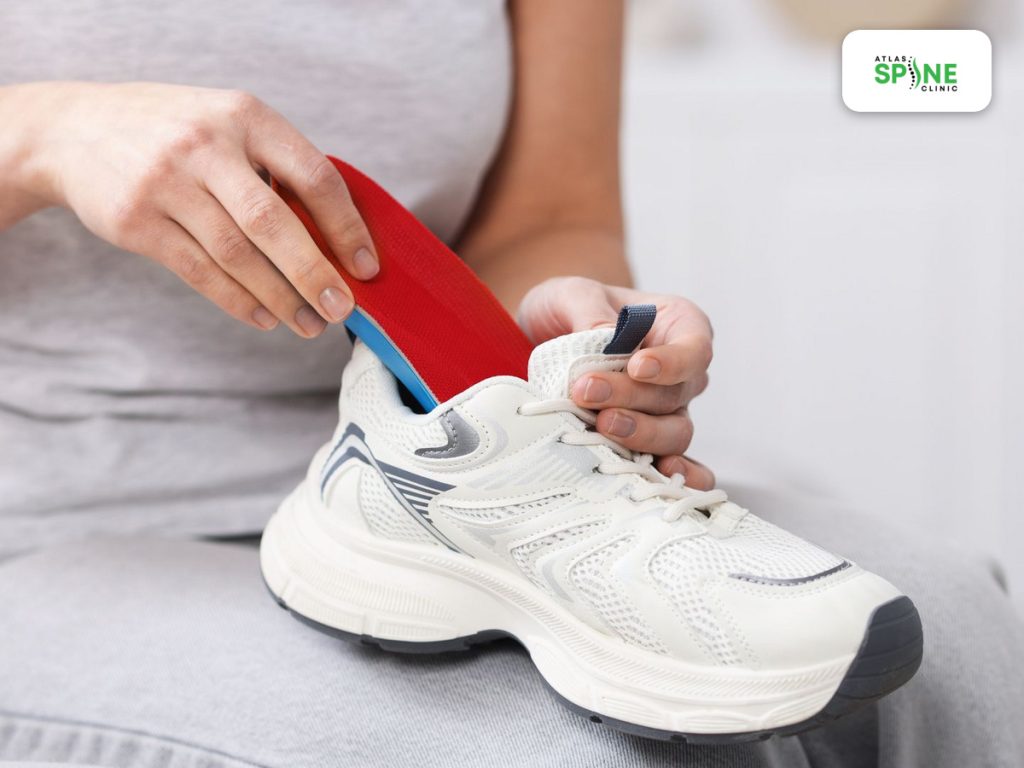
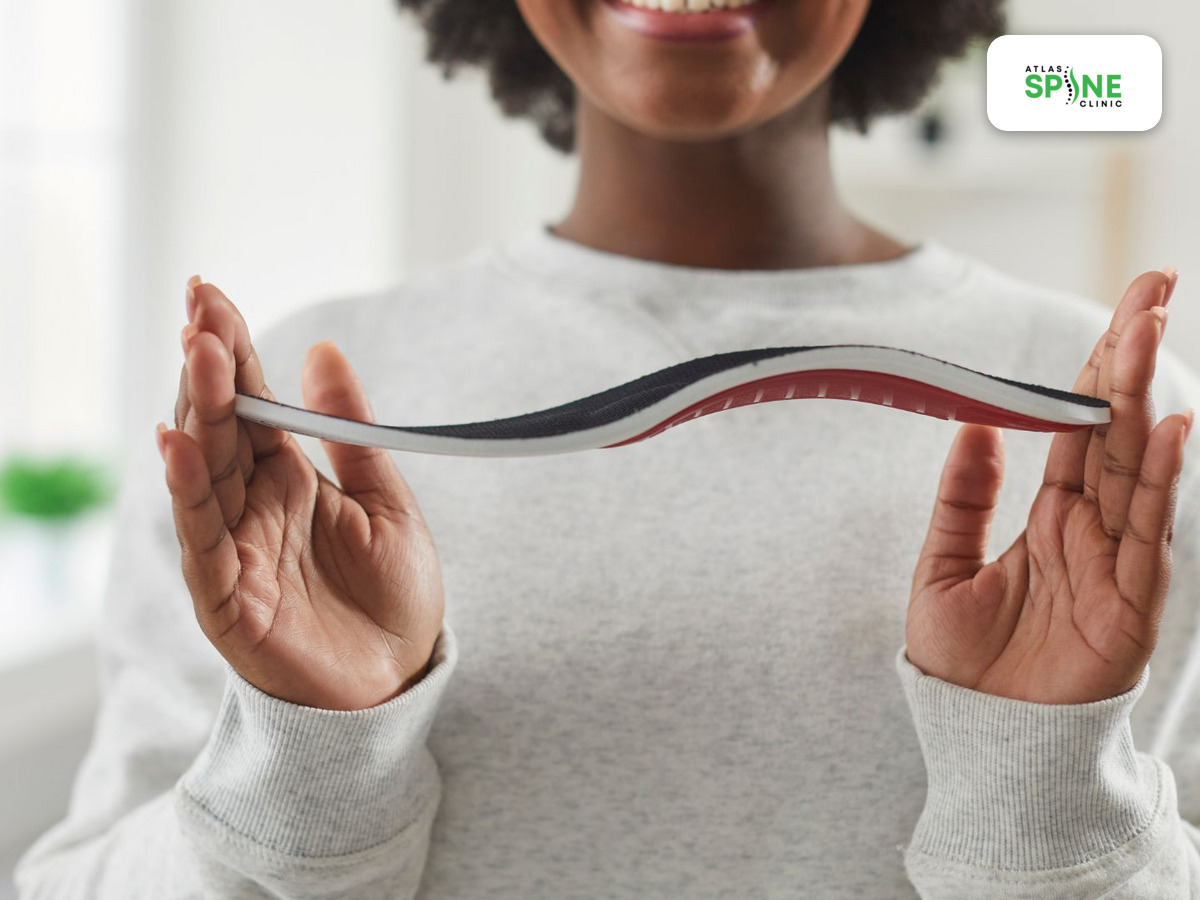
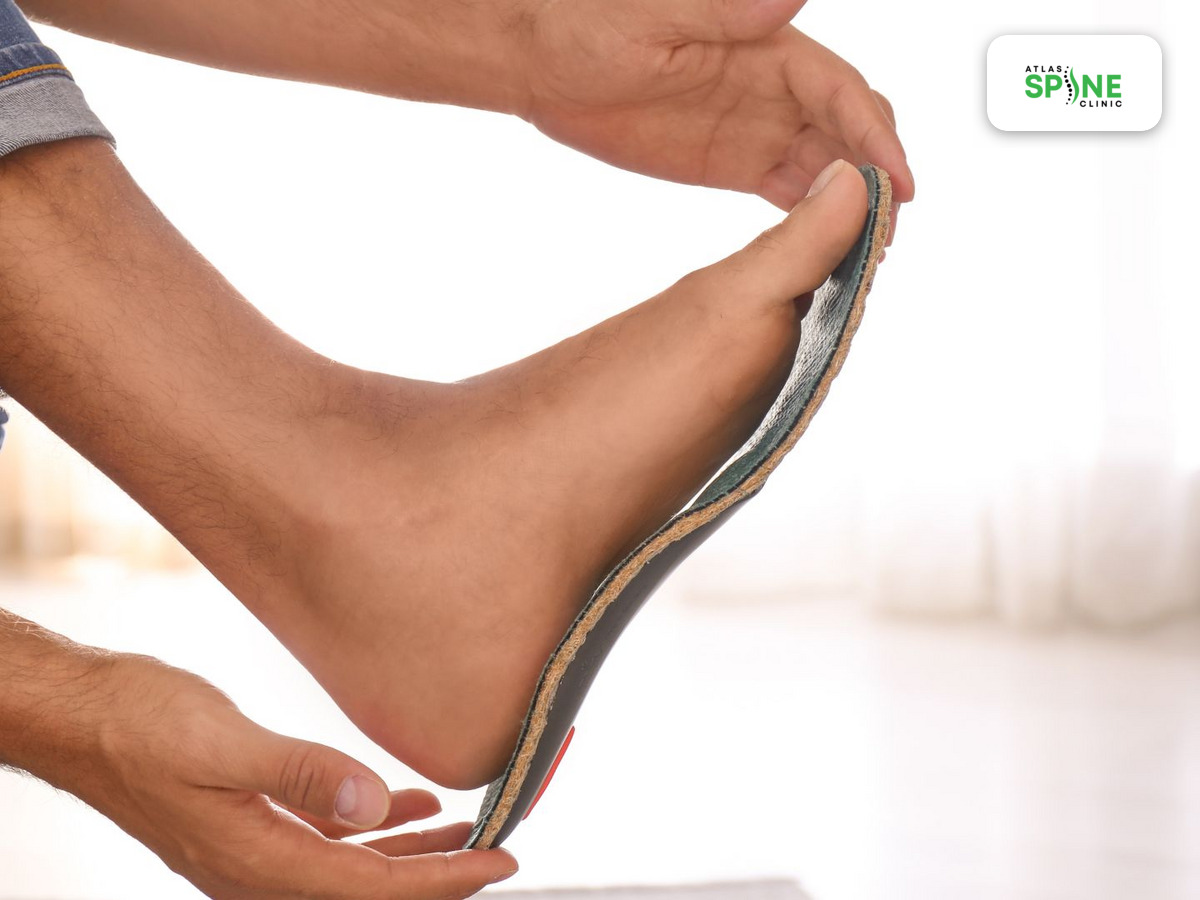
Custom orthotics are medical devices made from a precise model of your own foot, prescribed to correct how your foot loads and moves. That is the key difference from anything you buy off a shelf. A drugstore insole is built for a generic foot shape and offers general cushioning or arch support. It can feel nice for a while, but it is not correcting anything specific to you.
At Atlas we take a 3D scan of your foot rather than the older messy plaster casting, build a digital model, and have the orthotics manufactured in a certified Canadian lab from your prescription. The result is a device matched to your foot and your problem, not an average of everyone’s.
The part most people miss: the kinetic chain
Here is the idea that makes orthotics a spine-clinic topic and not just a foot one. Your body moves as a linked chain. Foot to ankle to knee to hip to pelvis to spine. When one link is off, the links above it compensate, and over time that compensation is what starts to hurt.
The most common example is overpronation, where the arch collapses inward more than it should with each step. That inward roll rotates the shin, which changes the angle at the knee, which shifts how the hip and pelvis sit, which loads the lower back differently. A leg length difference does something similar. So a person can come in with stubborn knee or lower back pain, having tried all the usual things for the knee or the back, when the actual driver is quietly happening at the floor.
It is not only collapsing arches, either. A high, rigid arch can be just as telling, because it absorbs shock poorly and passes more impact straight up to the knee and hip with every step. Worn out, broken down shoes do the same by quietly removing the support you used to have. This is why two people with the exact same back pain can need completely different answers. The right fix depends on what their feet are actually doing under load, which is precisely what an assessment is built to find.
This is why our assessment looks at more than your feet. Your clinician evaluates your posture, your walking pattern, your foot mechanics, and even the wear pattern on your shoes, reading the whole chain from your feet up to your hips. Treating the feet in isolation would miss the point.
When orthotics genuinely help
Custom orthotics tend to earn their place in a few clear situations:
- Foot-driven pain like plantar fasciitis, fallen arches, or general foot fatigue, where support and offloading make a real difference. If persistent heel pain is your issue, this pairs closely with how we treat plantar fasciitis.
- Knee and hip pain linked to alignment, including some cases of knee or hip arthritis, where improving how load travels up the leg takes pressure off a sore joint.
- Lower back pain with a mechanical foot component, where overpronation or a leg length difference is stressing the lumbar spine, and steadying the base helps settle it.
- People on their feet all day, on hard floors or logging heavy mileage, whose symptoms are clearly tied to standing and walking load.
The honest thread through all of these is the same: orthotics help most when a real foot-mechanics problem is genuinely part of your pain, and an assessment is what tells us whether that is true for you.
When they are not the answer
Just as important is being straight about when orthotics are not the fix. If your pain has nothing to do with how your feet load, a great pair of orthotics will not do much. Foot pain from a specific injury, an inflammatory or systemic condition, or nerve-related pain needs its own diagnosis first, not a support under the foot.
And even when orthotics are right, they work best as one part of a plan, not a standalone cure. On their own they support and realign. Combined with hands-on chiropractic care, targeted exercise, and treatment of the tissues that have been overworked, they hold the correction while the rest of the chain recovers. We will tell you honestly if we do not think orthotics are what your problem needs, rather than sell you a device that will sit in a drawer.
What the assessment and process look like
There are three simple steps. First, a full biomechanical and gait assessment, where we watch how you stand and walk and map the whole kinetic chain. Second, a 3D scan of your feet to build the precise digital model. Third, fabrication in the certified lab and a proper fitting, with minor adjustments included so the fit is right.
Most people adapt to new orthotics within one to two weeks. We suggest starting with a few hours a day and building up, since a little early awareness as your body adjusts to the new alignment is normal. With regular use, a well-made pair typically lasts two to five years, depending on your weight, activity, and the type of orthotic.
A quick note on cost and coverage
Custom orthotics are commonly covered by extended health benefit plans in Ontario, often in the range of two to five hundred dollars, and we provide all the documentation your insurer needs for reimbursement. A few plans ask for a prescription from a specific regulated professional such as a chiropractor or physiotherapist, which we can sort out as part of your visit. You can see what they cost on our price list, and no referral is needed to book the assessment.
What this looks like in practice
Consider a composite example, drawn from the kind of case we see rather than one specific patient. An electrician in his forties comes in for nagging lower back pain and a sore right knee. He has stretched, rested, and swapped his mattress, with little change. On assessment, one arch is collapsing noticeably more than the other, his knee is tracking inward when he loads it, and his shoes are worn down unevenly on the inside edge. The back and knee are real, but they are downstream of the feet.
The plan is not just orthotics. We settle the irritated tissues with hands-on care, add a short strengthening routine for the hips and core, and prescribe custom orthotics to steady the base so the correction holds between visits. Over the following weeks the knee quiets down, the back flares less, and the improvement sticks because we treated the foundation, not only the symptom.
Where to start
If you have knee, hip, or back pain that has not responded to the obvious fixes, your feet are worth ruling in or out. The first step is a proper look at how you load and move, not a guess. Book an orthotic assessment at Atlas Spine Clinic in Scarborough, or call us at (647) 794-6868. We will assess the whole chain, tell you honestly whether orthotics are part of your answer, and build a plan around what your body actually needs.
