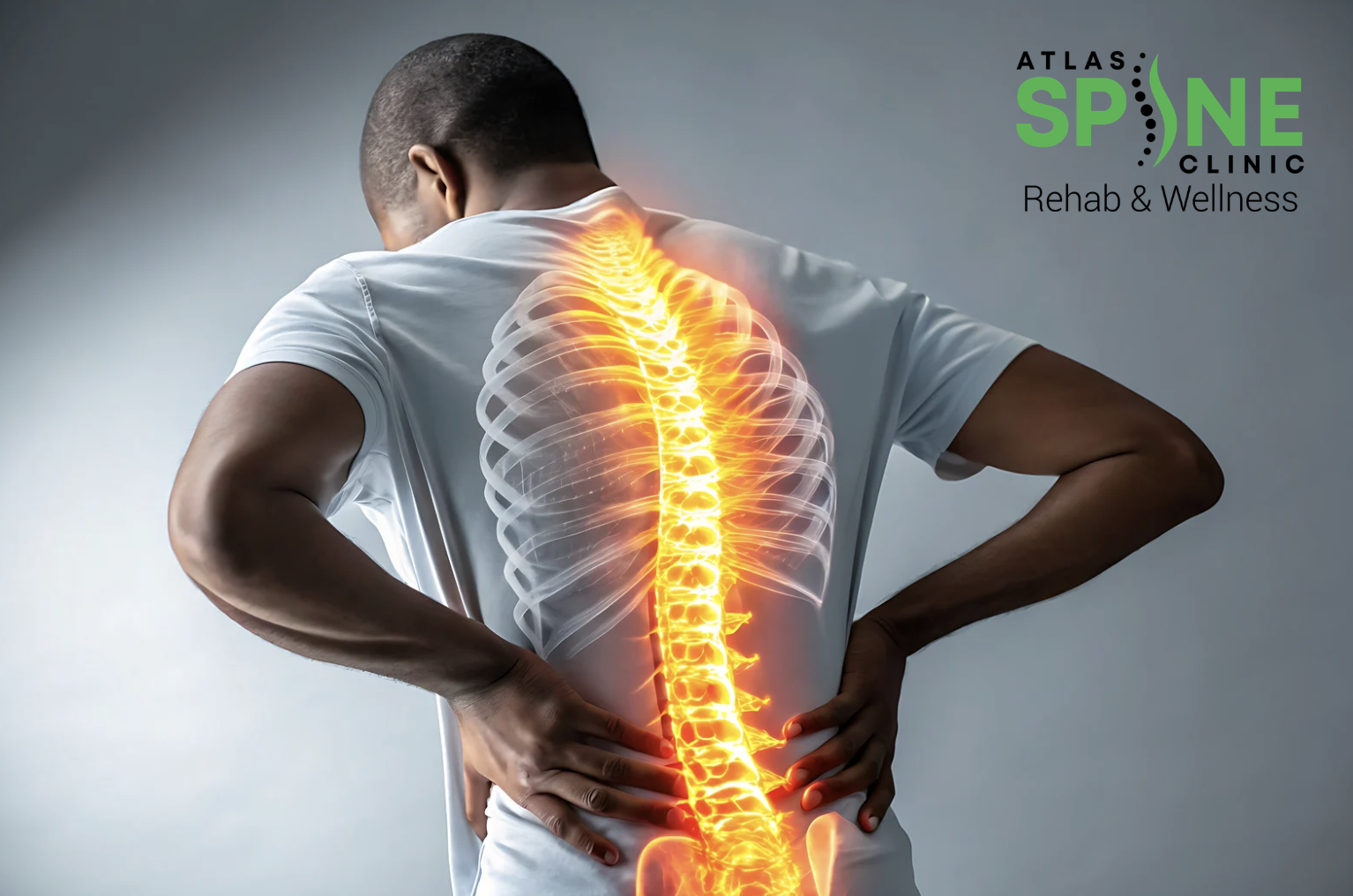
Why Does My Back Hurt? A Practical Guide to Causes and Types of Back Pain
When your back hurts, everything else fades into the background. A dull ache, a sharp twinge, pain that travels down your leg — suddenly your body is demanding answers.
But searching online often makes things worse. Endless medical terms, conflicting advice, and worst-case scenarios leave you feeling unsure instead of informed.
This guide is here to change that.
At Atlas Spine Clinic, we believe clarity is the first step toward recovery. Below, you’ll find a practical framework to help you understand why your back may hurt, what the symptoms mean, and how to decide your next step with confidence.
First, Let’s Understand How the Back Works
Your spine is not just a stack of bones – it’s a dynamic system designed for movement, protection, and communication.


- Vertebrae provide structure and protect the spinal cord
- Intervertebral discs act as shock absorbers
- Spinal nerves carry signals between the brain and body
- Muscles and ligaments stabilize and move the spine
Back pain usually occurs when one or more of these structures is irritated, strained, or compressed.
Where Your Back Hurts Matters
Lower Back Pain (Lumbar Spine)
The most common area of back pain.
Possible causes include:
- Muscle strain from lifting, twisting, or posture
- Herniated disc, where disc material presses on a nerve
- Sciatica, causing pain down one leg
- Degenerative disc disease, age-related disc wear
Lower back pain often worsens with sitting, bending, or lifting.
Upper & Middle Back Pain (Thoracic Spine)
Less common, but increasingly seen with desk work and device use.
Often linked to:
- Poor posture and prolonged sitting
- Myofascial pain, involving tight trigger points
- Direct trauma, such as falls or accidents
This pain is frequently muscular but can become chronic if ignored.
Comparing Common Back Conditions
Herniated Disc
- What it is: Disc material bulges or ruptures
- How it feels: Sharp pain, numbness, tingling, weakness
- Key clue: Pain may worsen with coughing or bending

Spinal Stenosis
- What it is: Narrowing of the spinal canal
- How it feels: Leg pain, heaviness, cramping
- Classic sign: Pain improves when sitting or leaning forward
Sciatica
- What it is: Nerve irritation (not a diagnosis itself)
- How it feels: Pain radiating from back to leg
- Common causes: Herniated disc, stenosis, degeneration
Acute vs Chronic Back Pain: Why the Timeline Matters
- Acute pain: Lasts days to weeks, often from strain or injury
- Chronic pain: Persists 12 weeks or longer, usually involving multiple contributing factors
Chronic pain is not “just bad luck” — it often reflects unresolved mechanics, nerve sensitivity, or tissue changes.
Lifestyle, Injury, and Daily Habits
Back pain doesn’t always come from one event.
Contributing factors include:
- Long hours sitting
- Weak core or glutes
- Poor lifting habits
- Previous injuries or car accidents
- Stress and muscle tension
These factors create imbalances that a skilled assessment can uncover.
Red Flags: When Back Pain Needs Immediate Attention
Seek urgent care if back pain is paired with:
- Loss of bowel or bladder control
- Progressive leg weakness or numbness
- Fever or unexplained weight loss
- Severe trauma (car accident, fall)
- Pain that does not improve with rest
These symptoms are uncommon, but important to recognize.
From Understanding to Action
Knowing what might be happening is empowering — but diagnosis requires a physical exam.
At Atlas Spine Clinic, we focus on identifying the root cause of back pain, not just suppressing symptoms. Our care may include chiropractic treatment, soft tissue therapy, electro-acupuncture, physiotherapy, and advanced non-surgical options like shockwave therapy — always tailored to your specific condition.
If you’re tired of guessing and ready for clarity, a professional assessment is the next step.
Frequently Asked Questions
Can back pain resolve on its own?
Yes, mild acute pain often does. Persistent or worsening pain should be evaluated.
Is surgery inevitable for disc problems?
No. Most disc-related back pain responds well to conservative, non-surgical care.
How do I know if it’s muscle or nerve pain?
Muscle pain is usually sore and localized. Nerve pain is sharper and often travels. A clinical exam confirms the source.
Book Your Next Step
If back pain is interfering with your work, sleep, or daily life, don’t settle for uncertainty.
Schedule a complimentary consultation with one of our team members at Atlas Spine Clinic and get a clear, personalized plan forward.