There is a particular kind of muscle pain that never quite goes away. A knot between your shoulder blade and your neck, a tight forearm that flares up whenever you type too long, an ache in your calf that eases with a rub and then creeps back a few days later. You book a massage, it feels wonderful for an afternoon, and by the weekend the tension has returned.
If that sounds familiar, the problem may not be that you need another massage. It may be that the muscle was never the whole story. This is where soft tissue therapy comes in, and it is worth understanding how it actually differs from the relaxing massage you might be picturing.
What soft tissue therapy actually is
Soft tissue therapy is a treatment focused on the muscles, tendons, ligaments and connective tissue, the parts of your body that get strained, torn or overworked. At Atlas Spine Clinic it is delivered by our chiropractors and physiotherapists, and it starts with something a spa massage does not: an assessment.
Before any hands-on work begins, your clinician evaluates what is happening and why. Is this a trigger point, a knotted band of muscle that refers pain elsewhere? An adhesion or scar tissue left over from an old injury? Muscle guarding that has built up around a joint that is not moving well? The treatment is aimed at that specific, diagnosed problem, and it sits inside a broader plan rather than standing on its own.
That is the whole idea. Soft tissue therapy is not about a general sense of relaxation. It is about finding the dysfunction and treating it.
How it is different from a regular massage
This is the distinction worth being clear about, because the two get confused constantly.
A relaxation massage has a genuine and valuable purpose: it helps you feel good and eases overall tension. It is not trying to diagnose anything, and it treats your body broadly rather than targeting one problem.
Soft tissue therapy works the other way around. It begins by figuring out what is wrong, then targets that specific injury or dysfunction, a particular trigger point, a band of scar tissue, an area of injury-related guarding, as one part of a plan to fix the underlying issue. The goal is not an hour of calm. The goal is to resolve the thing that keeps bringing your pain back.
Both have their place. But if you have a recurring, specific complaint, the assessment-first approach is usually what actually moves the needle.
The techniques we use
Soft tissue therapy is a family of hands-on techniques rather than a single method. Depending on what the assessment finds, your treatment at Atlas may include:
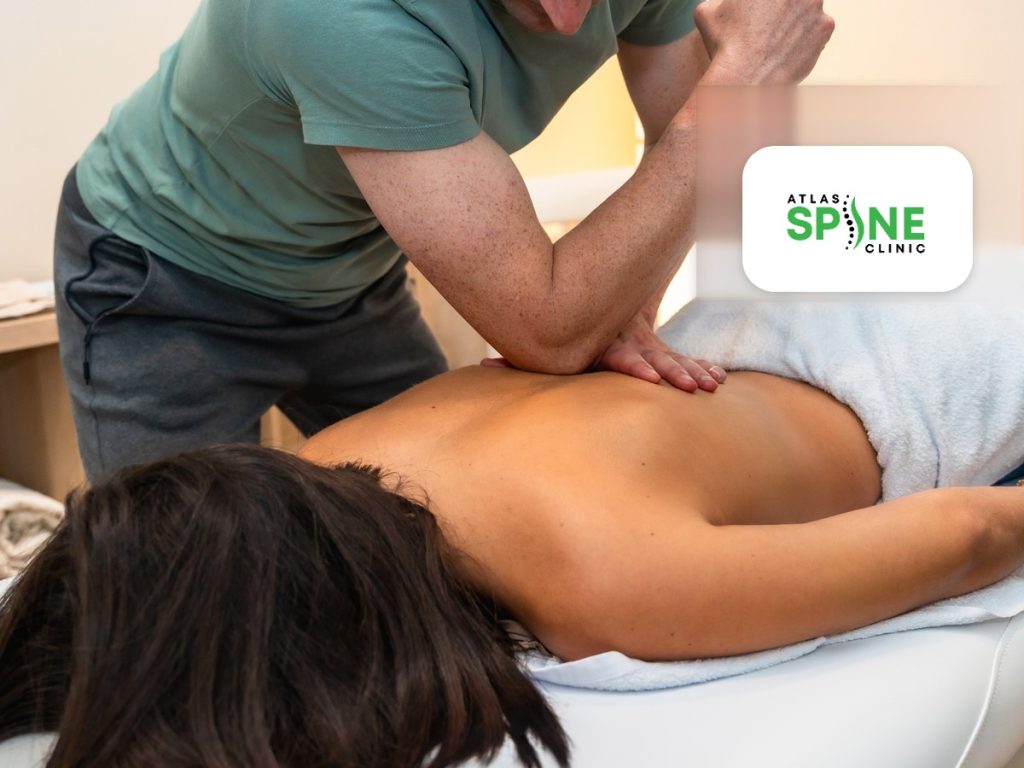
- Therapeutic massage of the affected muscles to ease tension and improve circulation
- Myofascial release, which works on the fascia, the connective tissue wrapping your muscles, to free up restricted areas
- Trigger point therapy, focused pressure on the tight, tender bands of muscle that refer pain to other spots
- Therapeutic stretching to restore length and movement to shortened muscles
- Ultrasound therapy and electrical stimulation, which we use as complementary modalities to reduce inflammation and support healing
Which of these you receive depends entirely on your assessment. The point of building a plan around you is that you get the techniques your particular problem needs, not the same routine given to everyone.

What soft tissue therapy treats
Soft tissue injuries generally involve tears, sprains or strains, whether from a sudden event like a fall or a sports collision, or from the slow grind of repetitive stress. At Atlas Spine Clinic, some of the conditions we commonly treat with soft tissue therapy include:
- Tennis elbow and similar repetitive strain injuries from overuse
- Rotator cuff injuries, affecting the muscles and tendons around the shoulder
- Whiplash, the neck strain that often follows a car accident
- Ankle sprains, where ligaments are overstretched or torn
- Everyday muscular neck and back pain, muscle strains, tendon overuse and the postural tension that builds up from long hours at a desk
Left untreated, these can settle into chronic pain and reduced mobility, which is a large part of why treating them early tends to go better.
When soft tissue therapy is not the answer
Just as important as knowing what it helps is knowing when your problem needs something more. Soft tissue therapy is not the right primary treatment, or not enough on its own, in several situations.
A genuine full thickness tear, a completely ruptured rotator cuff or Achilles tendon for example, is not something hands-on soft tissue work alone will fix, and it needs proper assessment and often a surgical opinion. The same is true for a suspected fracture. If you have significant nerve involvement, real numbness or weakness rather than ordinary aching, that points beyond muscle and needs investigating. And red flag pain, meaning severe unrelenting pain, pain with fever, pain after a major trauma, or pain that comes with signs of something systemic, warrants medical attention and usually imaging rather than a treatment table.
Part of a proper assessment is recognizing these situations. If your clinician at Atlas finds something that calls for imaging or a specialist, the honest answer is to refer you on, not to keep treating.
What it feels like, and how many sessions
Soft tissue therapy is not always gentle, and it helps to know that going in. Trigger point work in particular can feel tender, a “good sore” sensation during the treatment, and it is normal to feel mildly sore for a day or so afterward, much like after a workout you are not used to. Your clinician adjusts the pressure to your tolerance, so it should never be something you simply endure.
There is no fixed number of sessions, because it depends on the injury. A recent, straightforward strain may settle in a handful of visits, while a longstanding or complicated problem takes longer. Rather than promise you a number, your clinician will lay out a realistic plan at your first appointment once they have assessed you.
Why it belongs in a bigger plan
Here is the honest part, and it is the reason we do not sell soft tissue therapy as a standalone service.
Hands-on soft tissue work is very good at calming an angry muscle down. It releases the trigger point, eases the tension, and gives you relief. What it cannot do by itself is change the reason the muscle got angry in the first place, the movement pattern, the weakness, the desk setup, the joint that is not moving the way it should.
That is why at Atlas Spine Clinic soft tissue therapy is combined with chiropractic adjustments, physiotherapy and practical changes to how you move and work. The soft tissue work settles the symptom. The adjustments, the strengthening and the ergonomic fixes are what stop it from coming straight back. They go together, and that combination is what turns short term relief into a problem that actually resolves.
The most common mistake
The single most common mistake we see is treating the symptom on repeat. Someone books a relaxation massage every few weeks for a knot that never truly leaves, getting a few good days each time while the underlying cause, the posture, the weak muscles, the overuse, goes unaddressed. The relief is real but temporary, and the problem quietly becomes permanent.
The opposite mistake is pushing through an acute injury and hoping it fades, letting a fresh strain harden into a chronic one. Neither extreme serves you. Getting the problem assessed, treating the cause and not just the sore spot, is what breaks the cycle.
An illustrative example
To make this concrete, here is a composite picture, illustrative rather than a real named patient.
An office worker in her late thirties had a nagging knot between her shoulder blade and neck that flared up every few weeks. She had been booking monthly relaxation massages for a year, and each one felt great for a few days before the tension crept back. At assessment, the real driver turned out to be a forward head desk posture and weak deep neck muscles. The soft tissue work released the trigger points and eased her pain, but the plan paired it with adjustments, specific strengthening and a small change to her workstation. Once the cause was addressed, the knot stopped returning, rather than being something she managed forever.
What it costs and how it is billed
At Atlas Spine Clinic, soft tissue therapy is provided by our chiropractors and physiotherapists as part of your treatment, so it is delivered within a chiropractic or physiotherapy visit rather than billed as a separate service. Those visits are $110 for an initial assessment, with follow up visits ranging from $80 to $110 depending on length and complexity. Many extended health plans cover chiropractic and physiotherapy, and we can talk you through the details when you book. For the current breakdown, see our price list or ask at your first appointment.
Booking your assessment
If you have pain, stiffness or limited movement from a recent injury or an ongoing complaint that keeps returning, an assessment is the sensible first step. It will tell you whether soft tissue therapy is right for your problem, what to combine it with, and if something needs a different kind of care, you will be told that plainly.
Call (647) 794-6868 or book an appointment at our Scarborough clinic, and we will assess your injury and build a plan around it.
General information, not medical advice. An assessment is needed to determine the cause of your pain and the right treatment for you.
Frequently asked questions
Is soft tissue therapy just a massage?
Not quite. A relaxation massage aims to ease general tension and help you feel good. Soft tissue therapy starts with an assessment, targets a specific diagnosed problem such as a trigger point or scar tissue, and forms part of a treatment plan aimed at the underlying cause.
Does it hurt?
It can feel tender, especially trigger point work, and mild soreness for a day afterward is normal. Your clinician adjusts the pressure to your tolerance, so it should be manageable rather than something you just endure.
How many sessions will I need?
It depends on the injury. A recent strain may settle in a few visits, while a longstanding problem takes longer. Your clinician will map out a realistic plan at your first appointment.
What conditions does it help?
Common ones include tennis elbow and other repetitive strain injuries, rotator cuff injuries, whiplash, ankle sprains, and everyday muscular neck and back pain. It is well suited to muscle, tendon and connective tissue problems.
When is it not the right treatment?
A full tendon rupture, a suspected fracture, significant numbness or weakness, or severe red flag pain need medical assessment and often imaging rather than hands-on soft tissue work alone. Part of the assessment is recognizing when to refer you on.
Why do you combine it with other treatments?
Soft tissue work relieves the symptom, but it cannot change the movement pattern, weakness or habits that caused it. Combining it with adjustments, exercise and ergonomic changes is what stops the problem from returning.
