

Your knee twinges on the stairs, it aches after you squat down to the garden, and every so often it catches or feels like it might give way underneath you. Maybe it started with one twisting moment during a game, or maybe it crept in over months without any single injury. Somewhere along the way you heard the words meniscus tear, and with them came the assumption that surgery is next. For most people, that assumption is wrong, and it is worth understanding why.
Here is the honest version of what a meniscus tear is, why it produces that catching, aching, giving-way feeling, when it genuinely needs surgery and when it does not, and the small number of warning signs that mean you should be checked by a doctor rather than book a treatment.
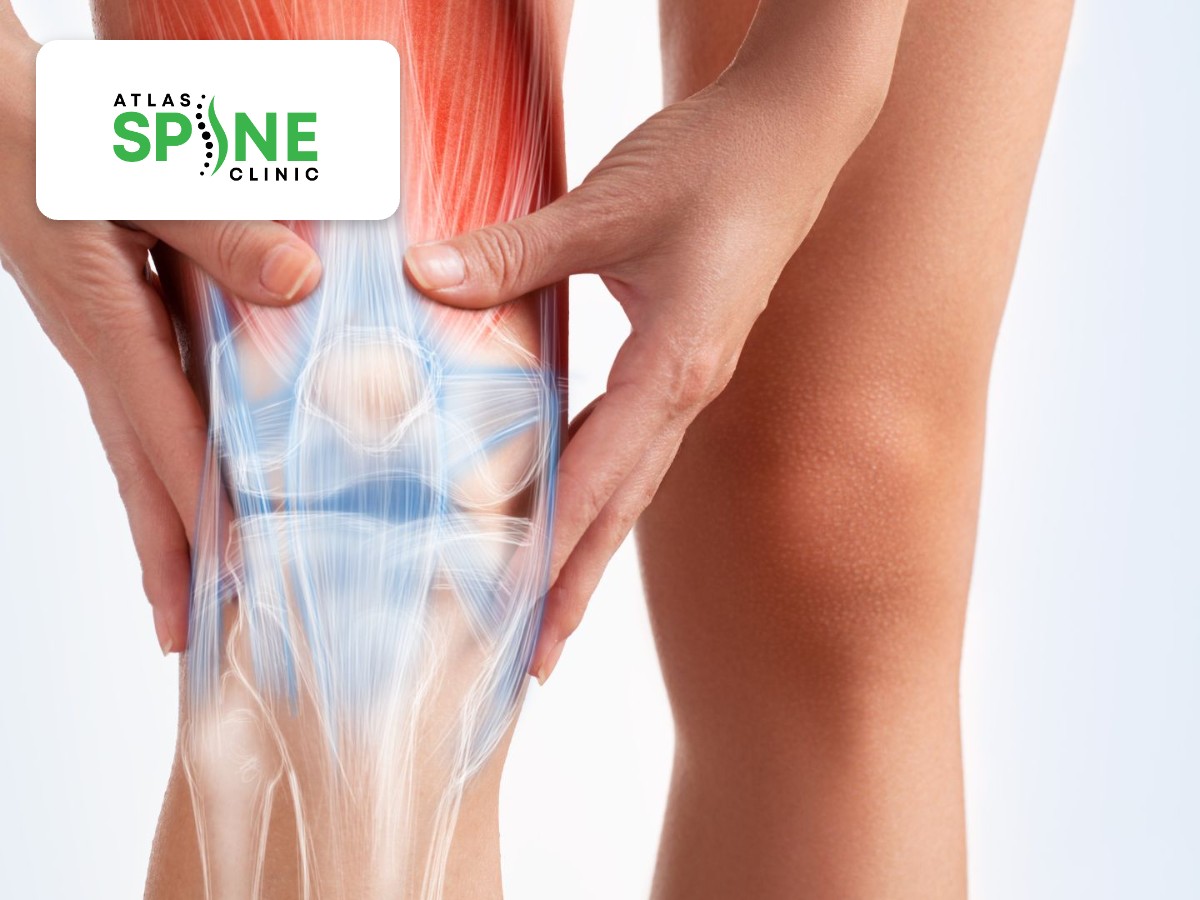
What the meniscus actually is
Each knee has two menisci, a pair of C-shaped pads of cartilage that sit between your thigh bone and your shin bone, one on the inner side and one on the outer side. They work as shock absorbers and spacers, spreading the load across the joint, adding stability, and helping the knee glide smoothly as you bend and straighten. Think of them as the cushions that stop the two bones grinding on each other every time you take a step.
A meniscus tear is simply a tear in one of these cartilage pads. It matters where the tear is, because the meniscus has a good blood supply around its outer rim and almost none in its inner portion. Tears in the well-supplied outer zone have some capacity to settle, while tears in the inner zone do not heal in the same way, which sounds discouraging until you realise that healing the cartilage is not the only path to a comfortable, reliable knee.
How meniscus tears happen and what they feel like
There are two common ways a meniscus tears, and they tend to happen to different people. The first is a sudden twist, usually with the foot planted and the knee bent, which is why it is common in sports that involve pivoting, cutting, and squatting. That kind of tear often comes with a moment you can point to, sometimes a pop, followed by pain and swelling over the next day or two. The second is gradual wear, where the cartilage becomes worn and brittle over the years and tears with something as ordinary as standing up from a deep squat. This degenerative kind is common from middle age onward and often has no dramatic moment behind it.
The feeling is fairly recognisable either way. There is usually pain along the joint line, the seam where the thigh and shin meet, and it tends to be worse with twisting, squatting, kneeling, and stairs. Many people notice swelling that comes and goes, a sense of the knee catching or clicking, and sometimes a feeling that the knee might buckle or give way. In some cases the knee locks, meaning it gets stuck and will not fully straighten, which is a more urgent sign we cover further down.
The important thing to know is that the presence of a tear on its own does not decide your treatment. Many people walking around comfortably have meniscus changes they will never know about, so what matters is your knee, your symptoms, and how it responds to the right care, not the word on a scan alone.
The honest part: does a meniscus tear always need surgery?
We want to be straight with you here, because the leap from meniscus tear to operation is made far too quickly. For most tears, and particularly the degenerative ones that come with wear rather than a single injury, surgery is not the first step, and a course of well-structured rehabilitation is a reasonable and often successful starting point. The research on the wear-related tears has been clear enough that guided exercise is widely recommended before considering an operation, because for many people the two paths end up in a similar place, and one of them does not involve surgery.
The reason rehabilitation works even when the cartilage itself does not knit back together is that a comfortable knee depends on far more than the meniscus. Strong, well-controlled muscles around the knee and hip take load off the irritated cartilage, steady the joint so it stops catching and giving way, and let you move through stairs and squats without the flare. The goal is not a perfect scan. The goal is a knee you can trust through a normal day, and for most people that is a realistic target without an operation.
Surgery has its place, and we will say so honestly when it applies. A knee that is truly locked from a displaced piece of cartilage, a large unstable tear, or a knee that has not settled at all despite good rehabilitation are the situations where a surgical opinion makes sense. For the majority, though, the sensible order is to rebuild the knee first and keep surgery as the option it should be rather than the default.
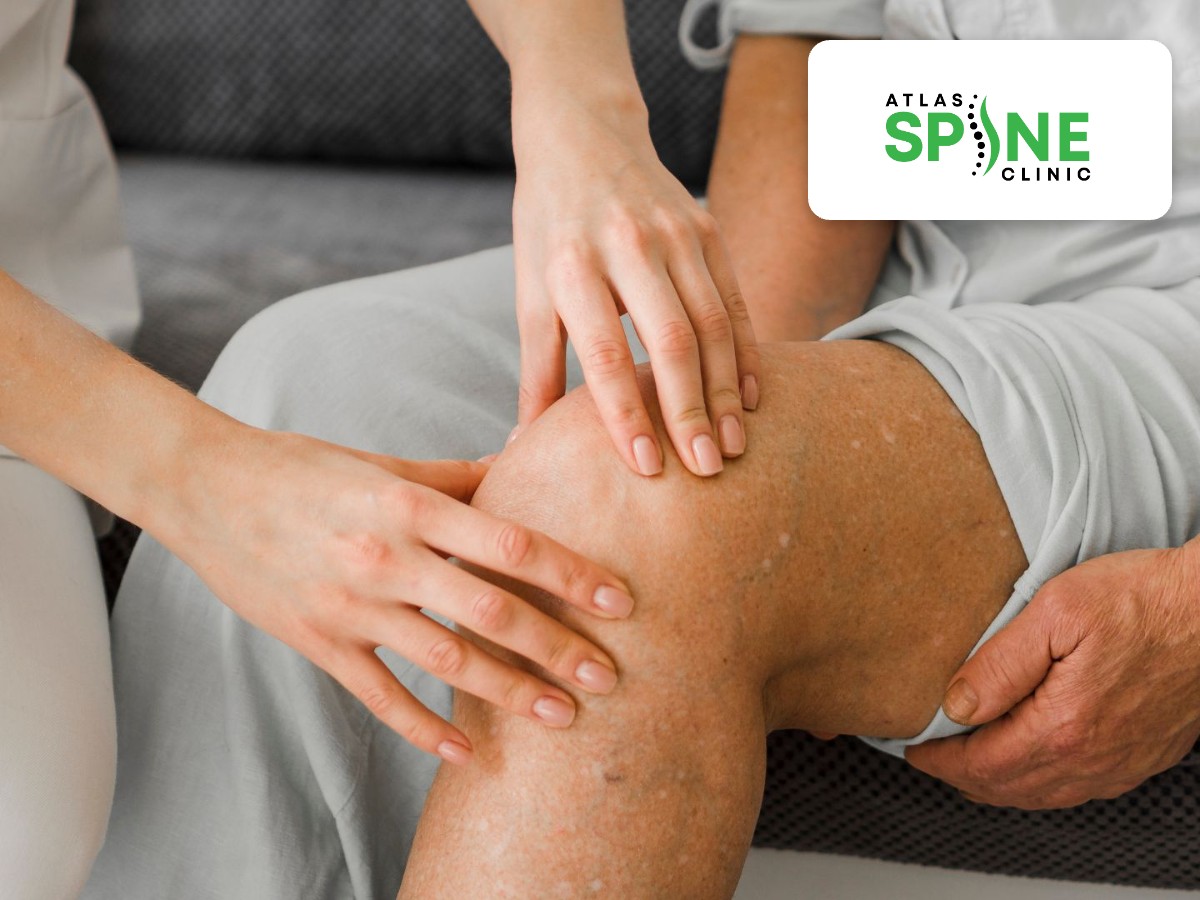
How we treat a meniscus tear at Atlas
At Atlas Spine Clinic in Scarborough, care for a meniscus tear starts with an assessment to work out what is actually driving your symptoms, because knee pain from the meniscus overlaps with ligament problems and with arthritis, and the plan is not the same for each. We check the joint line, how the knee moves, whether it is catching or locking, and how the muscles and mechanics of your hip, knee, and foot are loading the joint, so the plan fits your knee rather than a generic template.
From there, treatment usually draws on a few things working together. Settling the irritated knee comes first, and soft tissue therapy along with gentle work to restore normal movement helps the swollen, guarded joint calm down and move more freely, while chiropractic care addresses the knee and the way the joints above and below it are moving. The part that makes it last is rebuilding, and guided physiotherapy strengthens the quadriceps, the hamstrings, and the hip and gluteal muscles that stabilise the knee, and retrains the control that stops it catching and giving way, progressing you back toward stairs, squatting, and sport as the knee is ready. Where the tear sits alongside early arthritis, our GLA:D program is an education and exercise approach built for exactly that, and our knee pain relief plan explains how we structure knee care more broadly. You can also see the fuller picture of how we handle lower limb problems on our hip, knee and ankle pain page. If your knee turns out to need a surgical opinion, we will tell you honestly and help you take that step.
Simple changes that help day to day
These are not a substitute for a proper assessment, but they take pressure off an irritated knee between visits.
Keep moving within comfort. A sore meniscus usually does better with gentle, regular movement than with complete rest, so short walks and easy range-of-motion movement tend to help more than sitting still, as long as they do not sharply flare the pain.
Be smart with the loads that catch it. Deep squats, kneeling, twisting on a planted foot, and long stretches on stairs are the movements that tend to aggravate a torn meniscus, so easing off those while the knee settles, and building back gradually, spares the joint the flare.
Manage the swelling sensibly. If the knee puffs up after activity, easing back and elevating it helps it settle. A knee that swells hard and fast, or that locks or gives way, is worth having assessed rather than pushing through.
When a knee needs a doctor, not a treatment
Most meniscus tears are not dangerous, but a small number of situations need medical care first, and a responsible clinic tells you when. Please seek prompt medical attention, rather than booking a treatment, if you notice any of the following.
A knee that is truly locked, meaning it is stuck and you cannot fully straighten it, needs prompt assessment, because a displaced piece of cartilage may be caught in the joint. A knee that gives way repeatedly and cannot bear your weight, or that swelled up rapidly and severely soon after an injury, should be checked to rule out a significant tear or a ligament injury such as the cruciate ligament. A knee that is hot, red, and swollen, especially with a fever, needs urgent medical attention because it can signal an infection. And a knee injury that came with a loud pop and immediate large swelling is worth a medical assessment rather than being treated as a simple strain. These situations are uncommon, but they come first.
Questions people ask
Does a meniscus tear always need surgery?
No. For most tears, and especially the wear-related ones, a course of guided rehabilitation is a reasonable first step, and many people get a comfortable, reliable knee without an operation. Surgery is reserved for a truly locked knee, a large unstable tear, or a knee that has not settled despite good rehabilitation.
Can a meniscus tear heal on its own?
It depends on where the tear is. The outer rim of the meniscus has a blood supply and some tears there can settle, while the inner portion has almost none and does not knit back together in the same way. The encouraging part is that a comfortable knee does not depend on the cartilage healing, because strengthening the muscles around the knee can take the load off the tear and settle the symptoms.
How do I know if it is my meniscus or arthritis?
They often overlap, particularly from middle age onward, and they can feel similar. An assessment that tests the knee in specific ways, along with your history and how the knee behaves, helps tell them apart, and the treatment often shares the same foundation of strengthening and load management either way.
How long until it feels better?
It depends on the type of tear and how long it has been going on, so we do not promise a fixed timeline. Many people notice the knee settling as the swelling comes down and the strengthening takes effect, with the lasting improvement coming as the muscles that support the knee are rebuilt.
Can I keep exercising with a meniscus tear?
Usually yes, with some adjustment. Gentle movement tends to help, while the specific loads that flare it, often deep squats, kneeling, and twisting, are worth easing off until the knee settles. Part of the plan is guiding you back to full activity safely rather than telling you to stop.
Ready to settle that knee?
You do not have to accept a knee that catches on the stairs and aches after a squat, and you do not have to assume that a meniscus tear means an operation. At Atlas Spine Clinic in Scarborough, we start with a proper assessment, explain clearly what is driving your knee pain, and build a plan around settling the joint and rebuilding the strength and control that let the knee carry you without the flare. If it turns out to need a surgical opinion, we will tell you honestly.
Book an appointment or call (647) 794-6868. We also offer a free 15-minute consultation if you would like to find out whether we can help before you commit to anything.
