
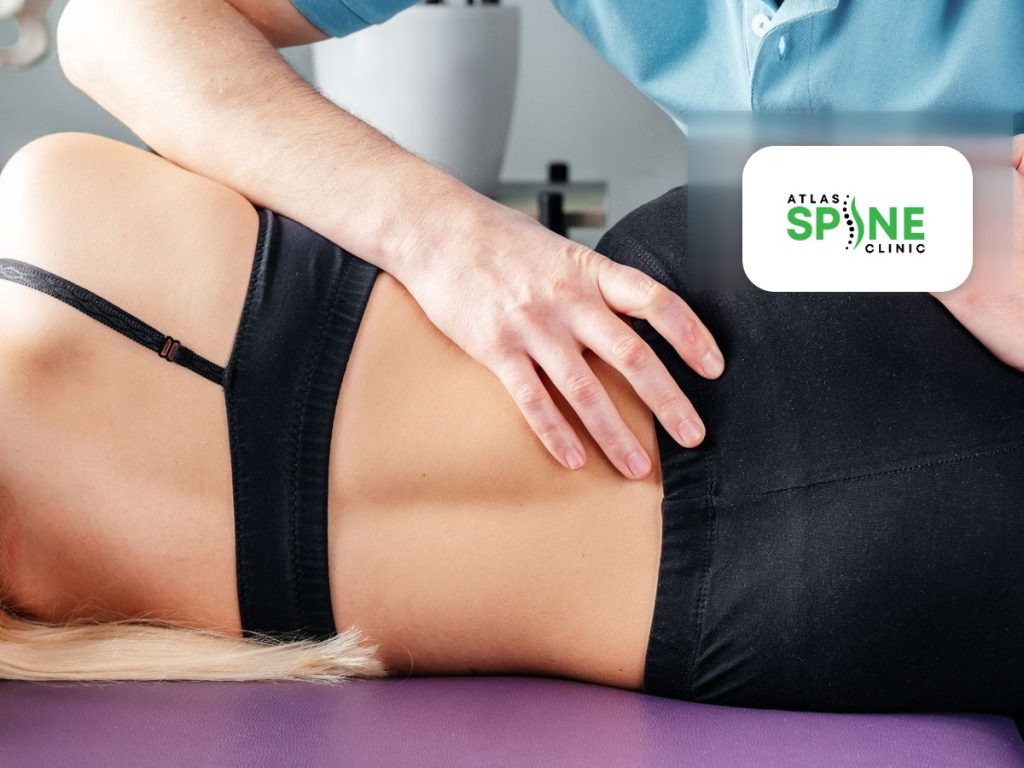
The pain sits low, off to one side, right where your back meets your buttock. It flares when you stand up from a chair, roll over in bed, climb stairs, or stand on one leg to pull on your trousers, and it eases a little once you get moving. Some people feel it spread into the buttock or the back of the thigh, so it gets mistaken for sciatica, and some feel it more as a deep, one-sided ache that never quite settles. If that sounds like your low back, there is a good chance the problem is coming from your sacroiliac joint.
Here is the honest version of what sacroiliac joint pain is, why it gets confused with disc and nerve problems, what genuinely helps, and the small number of warning signs that mean you should be checked by a doctor rather than book a treatment.
What the sacroiliac joint actually is
The sacroiliac joint, usually shortened to the SI joint, is where the base of your spine meets your pelvis. You have one on each side, joining the triangular bone at the bottom of the spine, the sacrum, to the large wing-shaped bones of the pelvis. These are strong, stable joints held together by thick ligaments, and they only move a small amount. Their job is to transfer the load of your upper body down into your legs every time you stand, walk, or lift, which makes them a busy junction even though they barely move.
Sacroiliac joint pain happens when one of these joints becomes irritated, either because it is moving a little too much, a little too little, or because the surrounding ligaments and muscles are overloaded and inflamed. It is not usually a single dramatic injury. More often it builds from the ordinary things that load one side of the pelvis unevenly over time, and the joint gradually becomes sensitive and sore.
Because the SI joint sits so low and so close to the spine, the pain it produces overlaps with several other problems, which is exactly why it is so often missed or mislabelled.
Why it happens and what it feels like
The SI joint tends to get irritated when the load through the pelvis is uneven or when the area is asked to do more than it is used to. Pregnancy is a common trigger, because the ligaments loosen and the pelvis carries a shifting load. A fall onto the buttock, a heavy or awkward lift, a stumble off a kerb, and long hours sitting with the weight tipped onto one side can all set it off. Having one leg function a little longer than the other, or a history of hip or low back trouble that changes how you move, can keep one SI joint working harder than its partner.
Sacroiliac joint pain has a fairly recognisable pattern. The ache is usually low and to one side, often pointed to with a single finger just below the belt line rather than across the whole back. It tends to be worse with the movements that load one leg at a time, such as standing up from sitting, rolling over in bed, going up and down stairs, and standing on one leg to dress. Sitting for a long time, and standing for a long time, can both aggravate it. Many people feel it spread into the buttock or the back of the thigh, and this referred ache is why it is so easily mistaken for sciatica or a disc problem, even though the SI joint and a pinched nerve are different things.
The important thing to know is that most sacroiliac joint pain is a mechanical problem of an irritated, overloaded joint, and that kind of problem responds well to the right care. It is worth telling apart from the small number of causes that need a doctor, which we cover further down.
SI joint, disc, or sciatica, and why the difference matters
People often arrive certain they have sciatica or a slipped disc, because the pain reaches into the buttock and leg. It is a fair assumption, but the source matters, because the treatment is not the same.
A disc problem and true sciatica come from irritation of a nerve in the lower back, and they usually send pain, numbness, or tingling well down the leg in a specific line, sometimes past the knee to the foot. Our post on sciatica explains that pattern, and our post on the herniated disc covers the disc side of it. Sacroiliac joint pain, by contrast, usually stays closer to home. It centres on the joint itself, low and to one side, and where it does refer into the buttock and thigh it tends to fade before it reaches the foot, and it comes without the clear nerve signs of numbness and weakness running down the whole leg.
The piriformis muscle deep in the buttock adds another layer, because a tight piriformis sits right beside the SI joint and can ache in a similar spot. This overlap is the whole reason a proper assessment matters. Guessing from symptoms alone is how people end up treating the wrong thing for months, and a hands-on examination that loads the SI joint specifically is what sorts out where the pain is really coming from.
The honest part: what actually helps
We want to be straight with you here, because there is a lot aimed at sacroiliac pain that overpromises. There is no belt, no single stretch, and no gadget that permanently fixes an irritated SI joint, and anyone selling an SI belt as a cure is not being honest with you. A sacroiliac belt can give some people a helpful feeling of support for a while, and it has its place in the short term, but it does not build the strength and control that stabilise the pelvis, so the moment it comes off the old problem is still there.
What genuinely helps is more straightforward and more lasting. The first part is settling the irritated joint and the tight muscles around it so the area calms down. The second part is rebuilding the strength and control through the hips, deep core, and pelvis that let the SI joint carry load evenly without becoming overloaded again. And where daily habits are feeding the problem, changing how you sit, stand, and lift takes the steady strain off the joint. The goal is not a perfectly symmetrical body, which nobody has. The goal is a pelvis that handles normal life without that low, one-sided ache, and for most people that is a realistic target.
How we treat sacroiliac joint pain at Atlas
At Atlas Spine Clinic in Scarborough, care for sacroiliac joint pain starts with an assessment to confirm the joint is the source, work out whether it is moving too much or too little, and see how your hips, low back, and daily habits are feeding the problem, so the plan fits you rather than a generic template. From there, treatment usually draws on a few things working together.
Restoring normal movement comes first. Gentle, targeted chiropractic adjustments help restore proper motion and mechanics to a stiff, restricted SI joint and the low back around it, which reduces irritation and makes the area more comfortable to move.
Releasing the surrounding muscles is next. Soft tissue therapy eases the tension in the tight buttock, hip, and low back muscles that guard around a sore SI joint and pull the pelvis unevenly, which calms the ache. For stubborn, long-standing cases, shockwave therapy can be added to help irritated tissue settle.
Strengthening is what makes it last. Guided physiotherapy rebuilds the deep core, gluteal, and hip muscles that stabilise the pelvis, so the SI joint carries load evenly instead of being overloaded on one side, and we adjust the sitting, standing, and lifting habits that set it off. This is the part that does the lasting work, which is why the strengthening matters as much as the hands-on treatment. The plan is matched to you and adjusted as the joint settles.
Simple changes that help day to day
These are not a substitute for a proper assessment, but they take pressure off the joint between visits.
Even out how you sit and stand. Sitting with your weight tipped onto one buttock, standing with your weight parked on one leg, and crossing the same leg for hours all load one SI joint more than the other, so keeping your weight even and changing position often gives the joint a rest.
Be kind to the joint with one-legged movements. Getting in and out of the car, climbing stairs, and dressing all load one side at a time, so keeping the knees closer together getting out of the car, and sitting to put on trousers and socks, spares the joint the twist that flares it.
Keep gently moving. Sacroiliac pain usually eases with light activity and stiffens with long stretches of sitting or standing still, so regular short walks and changing position often tend to help more than resting it completely. If any particular movement sharpens the pain or sends symptoms down the leg, stop and have it assessed rather than pushing through.
When low back pain needs a doctor, not a treatment
Most sacroiliac joint pain is not dangerous, but a small number of situations are, and a responsible clinic tells you when to seek medical care first. Please seek prompt medical attention, rather than booking a treatment, if you notice any of the following.
Low back or pelvic pain alongside any loss of control of your bladder or bowel, or numbness in the saddle area between the legs, needs urgent, same-day medical assessment. Progressive weakness in a leg or foot, back pain that follows a significant fall or car accident, and back pain with a fever or with a history of cancer all need to be checked by a doctor rather than treated as simple joint pain. Pain that is worse at night or wakes you from sleep, and unexplained weight loss alongside the pain, should also be seen.
One more pattern is worth a mention. Low back and buttock stiffness that is at its worst first thing in the morning, lasts more than half an hour, eases as you move through the day, and has been building slowly in someone younger can sometimes point to an inflammatory type of arthritis rather than a simple mechanical joint. That is worth a doctor visit for the right tests. These situations are uncommon, but they come first.
Questions people ask
Is sacroiliac joint pain the same as sciatica?
No, although they are easily confused. Sciatica is nerve pain that travels down the leg from an irritated nerve in the lower back, often with numbness or weakness. Sacroiliac joint pain comes from the joint where the spine meets the pelvis, sits low and to one side, and where it does spread into the buttock and thigh it usually fades before the foot and comes without the clear nerve signs. An assessment tells them apart.
Will an SI belt fix it?
A sacroiliac belt can feel supportive and has a role in the short term, but it does not build the strength and control that stabilise the pelvis, so the improvement tends to fade once it comes off. Lasting change comes from settling the joint and strengthening the muscles that support it.
Do I need an MRI or a scan first?
Usually not. Sacroiliac joint pain is generally recognised from the pattern of symptoms and a physical examination that loads the joint in specific ways. Imaging is considered when the picture is unclear, when symptoms are not settling as expected, or when a warning sign is present. Bring any imaging you already have, and the assessment will tell you whether more is needed.
How long until I feel better?
It depends on how long it has been going on and what is driving it, so we do not promise a fixed timeline. Many people notice the ache easing early, with the lasting improvement coming as the strengthening takes effect and the daily habits change.
Can I keep exercising?
Usually yes, with some adjustment. Gentle movement tends to help sacroiliac pain, while the specific loads that flare it, often heavy one-legged or twisting movements, are worth easing off until the joint settles. Part of the plan is guiding you back to full activity safely rather than telling you to stop.
Ready to settle that low back and buttock ache?
You do not have to accept a sore, one-sided low back as part of getting older, and you do not have to guess whether it is your disc, a nerve, or the joint itself. At Atlas Spine Clinic in Scarborough, we start with a proper assessment, explain clearly what is driving your sacroiliac joint pain, and build a plan around settling the irritated joint and strengthening the muscles that support your pelvis so the ache stops coming back. If it turns out to be something that needs a doctor first, we will tell you honestly.
Book an appointment or call (647) 794-6868. We also offer a free 15-minute consultation if you would like to find out whether we can help before you commit to anything.
