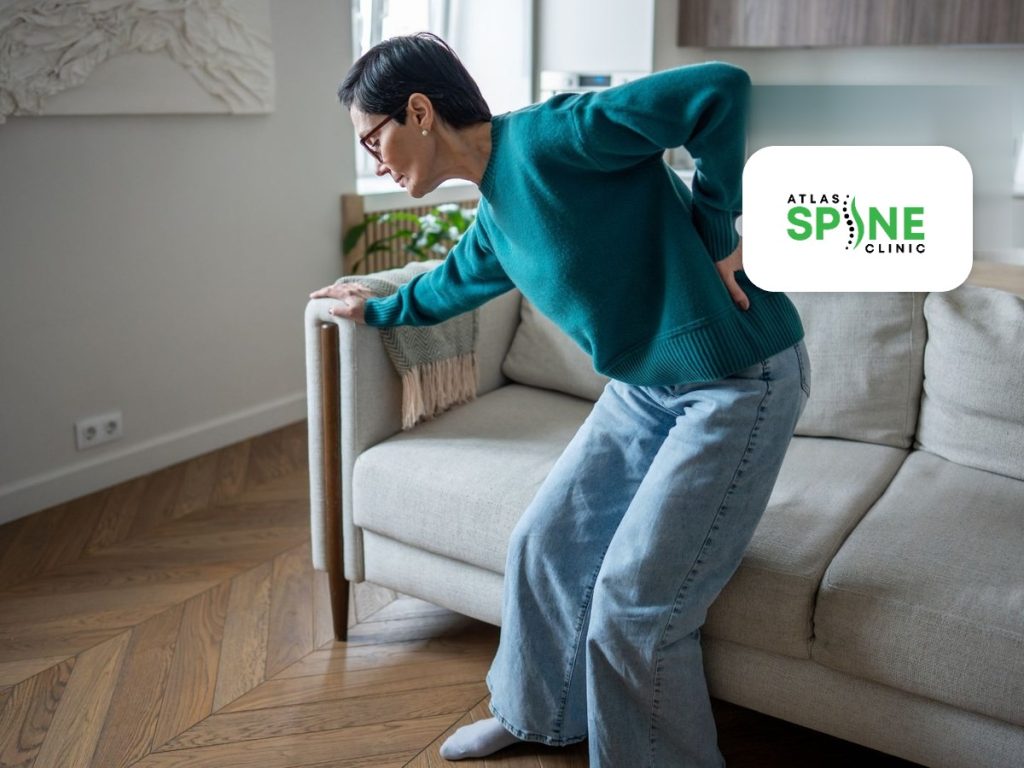
If a disc in your lower back has herniated, you do not need anyone to tell you something is wrong. The pain can be sharp and deep, it can shoot down one leg, and it can turn simple things like sitting, bending, or getting out of bed into a slow, careful negotiation. Many people who come to us in Scarborough have already spent weeks hoping it would settle on its own, and by the time they book, they are worried the only thing left is surgery.
Here is the honest starting point. A herniated disc is a real injury, but for most people it is not a surgical one. This guide explains what a herniated disc actually is, how to tell it apart from a simple back strain, the non-surgical treatments that genuinely help, and the small number of warning signs that mean you should not wait.
What a herniated disc actually is
Your spine is a stack of bones called vertebrae, and between each one sits a disc. Each disc has a tough outer ring and a soft, gel-like centre, and together they act as cushions and shock absorbers that let your back bend and twist. A herniated disc happens when the soft centre pushes through a weak point or a tear in the outer ring.
The problem is usually not the bulge itself. It is what the displaced material presses against. When it presses on a nearby spinal nerve, that pressure and the inflammation around it are what produce the pain, and often the tingling, numbness, or weakness that travels away from the spine.
People use several terms for this, and they are not all the same. A bulging disc is when the disc pushes outward but the outer ring is still intact. A herniated disc, sometimes called a slipped or ruptured disc, is when the inner material actually breaks through. If you want the fuller picture on the milder version, we cover it in our guide on whether a chiropractor can help with a bulging disc.
How to tell if it is a herniated disc
A herniated disc in the lower back often feels different from an ordinary muscular backache. A few things point toward it:
- Pain that travels. The classic sign is pain that starts in the lower back or buttock and runs down the leg, sometimes past the knee to the foot. This is sciatica, and a herniated disc is one of its most common causes.
- Nerve sensations, not just ache. Tingling, pins and needles, numbness, or a feeling of weakness in the leg or foot suggests a nerve is involved, not only a muscle.
- Pain that changes with position. Many people find that sitting, bending forward, coughing, or sneezing makes it worse, because those movements increase pressure on the disc.
A herniated disc in the neck follows the same pattern into the arm and hand instead of the leg. None of this replaces a proper assessment, but if the pain is clearly traveling and there are nerve sensations along with it, it is worth having it looked at rather than waiting it out.

The honest part: most herniated discs heal without surgery
This is the message we want you to leave with, because it is both true and reassuring. The large majority of herniated discs improve with conservative, non-surgical care over a period of weeks to a few months. The body is able to reabsorb some of the displaced disc material over time, the inflammation around the nerve settles, and the right treatment and movement help that process along rather than forcing it.
That does not mean you should simply wait and hope. It means the goal of good treatment is to calm the irritated nerve, take pressure off the disc, and rebuild the support around your spine so the same thing is less likely to happen again. Surgery is a real option for a specific group of people, and we will be straight about who that is later in this guide, but it is the exception, not the starting point.
How we treat a herniated disc at Atlas
At Atlas Spine Clinic in Scarborough, herniated disc care is non-surgical and built around one idea: reduce the pressure on the nerve, then restore the strength and movement that protect the area. Because chiropractic, physiotherapy, and other treatments sit under one roof, your plan can combine the tools that suit your case rather than relying on a single approach.
The main options we draw from include:
- Lumbar decompression therapy. This is a gentle, motorized traction treatment. You lie on a specialized decompression table with a harness around your lower back, and the table applies a slow, controlled pull that creates space between the vertebrae. The aim is to ease pressure off the disc and nerve and to help the disc draw in the fluid and nutrients it needs to recover. It is not painful, and there is no downtime afterward.
- Chiropractic care. Careful, targeted techniques help restore movement to stiff segments and reduce the mechanical load on the injured disc. For disc-related pain we favour gentle, specific methods rather than forceful ones.
- Physiotherapy and progressive exercise. Once the acute pain settles, guided physiotherapy is what makes the result last. Rebuilding the deep muscles that support your spine takes ongoing pressure off the disc and lowers the chance of a repeat.
- Soft tissue therapy and electrotherapy. Hands-on soft tissue work and modalities such as IFC or TENS can calm the muscle guarding and pain that surround a disc injury, which makes the rest of the plan easier to tolerate.
Every plan starts with an assessment so the treatment matches what your body is actually doing, and we adjust as you improve. Care is provided by our clinicians including Dr. Arvin Sepahdoost, DC, and our physiotherapy team.

When surgery is actually needed, and who this is not for
Conservative care suits most people with a herniated disc, but not everyone, and a responsible clinic tells you that plainly. Surgery or an urgent medical opinion is genuinely warranted in a few situations:
- Progressive weakness. If the strength in your leg or foot is clearly getting worse over time, that needs prompt medical assessment rather than more waiting.
- Pain that does not respond at all. If a fair trial of good conservative care brings no meaningful change, it is reasonable to discuss other options, including a surgical opinion.
- A medical emergency. Loss of bladder or bowel control, or numbness in the saddle area between the legs, can signal a serious condition called cauda equina syndrome. This is not something to book an appointment for. Go to the emergency department right away.
There are also times when what feels like a disc is something else, such as a fracture, an infection, or pain referred from elsewhere. Part of the value of an assessment is catching the cases that are not a straightforward herniated disc and directing you to the right care.
Mistakes that slow recovery down
- Long bed rest. A day or two of relative rest during the worst of it is fine, but staying flat for a week tends to make things stiffer and weaker. Gentle, sensible movement usually helps more than complete rest.
- Pushing straight through it. At the other extreme, forcing your normal workouts or heavy lifting through sharp nerve pain can aggravate the injury. The middle path, guided by an assessment, is what works.
- Relying on painkillers alone. Medication can take the edge off so you can move, but it does not address the pressure on the nerve or the weakness that let the disc give way. It is a bridge, not a fix.
Questions people ask
Can a herniated disc heal on its own?
Often, yes. Many herniated discs settle over weeks to a few months as the body reabsorbs some of the displaced material and the nerve inflammation calms down. Good treatment supports and speeds that natural process and helps prevent a repeat.
Is lumbar decompression safe for a herniated disc?
For suitable cases it is a gentle, non-invasive option. It uses slow, controlled traction rather than force, and most people find it comfortable. As with any treatment, it starts with an assessment to confirm it is appropriate for you.
How long until I feel better?
It depends on the severity and how long it has been going on, so we do not promise a fixed timeline. Many people notice the sharp, traveling pain easing first, with strength and stamina rebuilding over the following weeks. We set honest expectations after assessing you.
Do I need a doctor’s referral?
You do not need a referral to book with us. If you are claiming through extended health insurance, WSIB, or a motor vehicle accident claim, the requirements vary, so it is worth confirming the details of your specific coverage. You can also see our price list for what treatment costs.
Will I need surgery?
Most people with a herniated disc do not. Surgery is reserved for specific situations such as progressive weakness or a failure to improve with conservative care, and the emergency signs above. We will always tell you honestly where you stand.
Ready to deal with that disc pain?
You do not have to guess whether your back pain is a herniated disc, and you do not have to jump straight to worrying about surgery. At Atlas Spine Clinic in Scarborough, we start with a proper assessment, explain clearly what is going on, and build a non-surgical plan around relieving the pressure and rebuilding your support. If surgery is genuinely the right path, we will tell you that too.
Book an appointment or call (647) 794-6868. We also offer a free 15-minute consultation if you would like to ask questions before committing to anything.
