
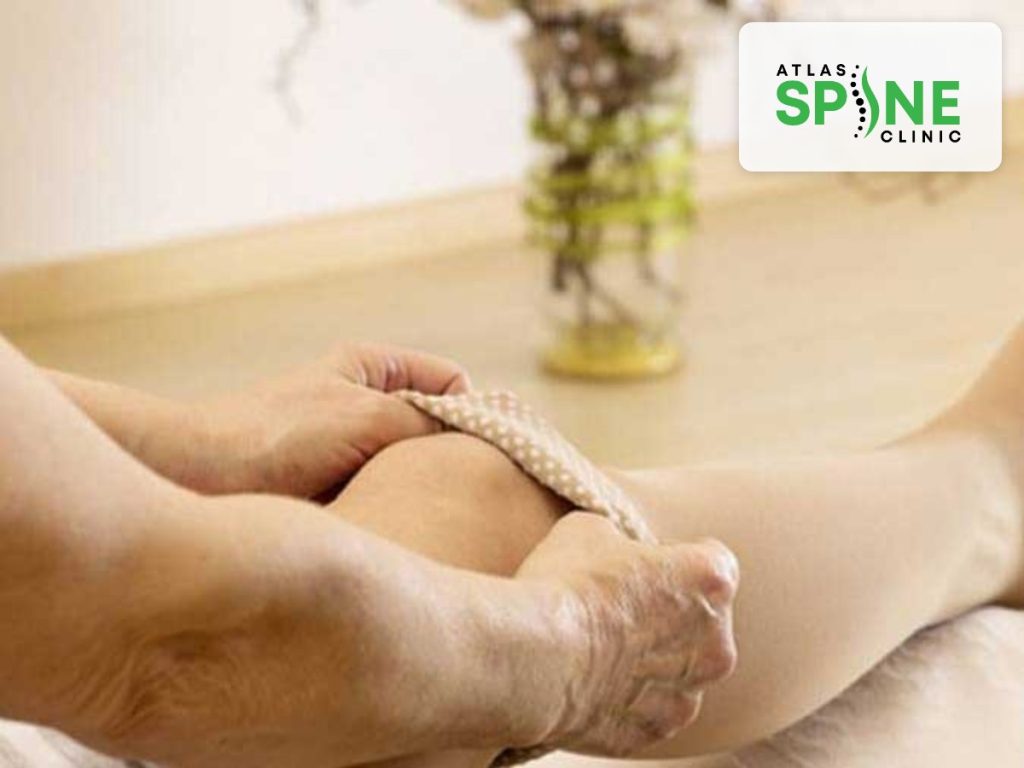
If your legs feel heavy, achy, or swollen by the end of the day, you have probably wondered whether compression socks are worth it, or whether they are just for older adults and hospital patients. The short answer is that they genuinely work for the right person, worn the right way. The longer answer is what this guide is about: who actually benefits, how to choose the right level of compression, and why a proper fitting makes all the difference.
Do compression socks actually work?
Yes, when they fit correctly and you wear them consistently. Compression socks are designed with graduated pressure, meaning they are firmest at the ankle and gradually ease as they move up the leg. That gentle squeeze helps your veins move blood back up toward the heart instead of letting it pool in your lower legs.
That is why people notice less swelling, less of that heavy, tired feeling, and more comfortable legs at the end of a long day. They are a standard, well-established tool for improving circulation and managing swelling, not a gimmick. The catch is that the benefit depends entirely on getting the right fit and the right level of compression, which is where most store-bought pairs fall short.
Who actually needs compression socks?
Compression socks are not just for one type of person. At our Scarborough clinic, we fit them for a wide range of people, and most are surprised to learn they are a good candidate.
People on their feet all day
This is one of the biggest groups we see: nurses, teachers, retail and warehouse workers, and tradespeople. After hours of standing, their legs feel heavy, achy, and swollen by evening. The right compression socks for swelling change how the whole day feels, so they are not collapsing on the couch the moment they get home.
Swelling, varicose veins, and circulation concerns
If you deal with general leg and ankle swelling, varicose or spider veins, or other circulation issues, compression keeps the blood moving and takes the pressure off your veins. Compression stockings for varicose veins are one of the most common and well-supported reasons to wear them.
Pregnancy
Many pregnant patients notice heaviness and swelling in their legs, especially later in the day. Compression can ease that discomfort, and it is generally most effective when put on in the morning before swelling sets in.
Recovery, travel, and rehab
Anytime you are sitting still for long stretches, fluid tends to build up. That makes compression helpful for patients recovering after surgery, anyone facing a long flight or drive, and people going through car accident or workplace injury rehabilitation, where sitting still leads to fluid building up. Compression often works alongside hands-on physiotherapy to keep recovery on track.
Older adults and people with diabetes
For older patients and anyone managing diabetes, healthy circulation matters even more. Compression can be a useful tool here, but this is also a group that should be properly assessed first, because the wrong level of compression can do more harm than good.
The most common compression sock mistakes
The biggest mistake we see is people buying online without ever being measured, then choosing a compression level by guessing. They pick a size off a chart, grab whatever sounds strong, and the socks either do nothing or feel uncomfortable enough that they stop wearing them.
A few other misconceptions come up constantly:
- “Tighter is better.” More compression is not automatically better. A sock that is too tight can actually restrict your circulation and cause harm. The right level depends on your situation, not on how firm it feels.
- “They are only for the elderly.” In reality they help nurses, pregnant patients, travelers, and active people just as much.
- “Wear them to bed for extra benefit.” Compression socks are generally meant for daytime, when you are upright and moving, not while you sleep lying down.
- “A pair now and then is enough.” Consistency is what actually delivers results. A correctly fitted pair you wear every day will always beat an expensive pair that sits in a drawer.
Why a professional fitting matters
The single biggest difference between compression socks that work and ones that disappoint is the fitting. When you grab a pair off a shelf or order online, you are guessing at your size and hoping for the best. A sock that is too loose does nothing, and one that is too tight can cut off circulation, so getting the measurement right is the whole point.
At Atlas Spine Clinic, a practitioner measures your legs properly so the socks actually fit the shape of your calf and ankle. You also get help choosing the right compression level instead of guessing, and we carry medical-grade options recommended based on your actual condition rather than a label on a box.
There is real guidance behind it, too. We look at why your legs are swelling in the first place, make sure compression is safe for you, and show you how to put the socks on and care for them so they keep working. That advice matters especially for patients with diabetes or circulation concerns.
One more practical advantage: buying through the clinic often means your extended health insurance can help cover the cost, because the socks are dispensed as a medical product with a proper assessment. That is something a random online order simply cannot offer.
How to choose the right compression level
Compression is measured in mmHg (millimeters of mercury). The two ranges we fit most often are:
- 15 to 20 mmHg (light): Best for everyday tired, achy legs, mild swelling, and prevention, including for people who stand a lot or travel.
- 20 to 30 mmHg (medium/firm): Better suited for varicose veins, more significant swelling, and post-surgical recovery.
So which is right for you? It comes down to what is actually going on with your legs, not how strong you think you need. Everyday heaviness and prevention usually call for the lighter range, while diagnosed vein issues or significant swelling tend to need the firmer one. Going higher than you need is not safer or more effective, and it can make the socks uncomfortable enough that you stop wearing them. That is exactly what a fitting appointment sorts out, so you leave with the right level for your needs.
How to put on and care for your compression socks
Even the perfect pair only works if you wear and maintain them properly. A few simple habits make a big difference:
- Put them on first thing in the morning, before swelling has a chance to build. Legs are at their smallest after a night lying down, which makes the socks easier to apply and more effective.
- Do not bunch or fold the top down. Folding the band over doubles the pressure in one spot and can act like a tourniquet. Smooth the sock out evenly with no wrinkles.
- Roll, do not yank. Turn the sock partly inside out to the heel, slip your foot in, then ease the rest up over your calf. Rubber gloves or a simple donning aid make this much easier, especially for hands that tire.
- Wash them regularly. Gentle washing keeps the elastic fibers working. Worn-out, stretched socks lose their compression and stop doing their job.
- Replace them on schedule. Most medical-grade socks lose effective compression after about three to six months of regular wear, so plan to refresh them rather than wearing a tired pair indefinitely.
A real example from our clinic
A nurse came to us worn out by her own legs. She was working long twelve-hour shifts, mostly on her feet, and by the end of each day her legs and ankles were swollen, heavy, and aching. She told us she was so tired by the time she got home that she could barely enjoy her evenings, and she had started dreading her shifts. She had tried a cheap pharmacy pair that never really fit and did not seem to help.
We measured her legs properly and talked through what was happening. Because her main issue was end-of-day swelling and fatigue from standing, we fitted her with a graduated 20 to 30 mmHg compression sock, sized to her actual calf and ankle, and showed her how to wear them through her shift.
The change came quickly. Within a couple of weeks, she said her legs felt noticeably lighter at the end of the day, the swelling was way down, and she was not collapsing the moment she got home. It was not magic, it was simply the right level of compression in a sock that actually fit, worn consistently. We see the same kind of turnaround with pregnant patients whose leg heaviness eases and with post-surgery patients who recover more comfortably once swelling is under control.
Getting fitted for compression socks in Scarborough
Because compression socks need proper measuring to work, the easiest way to begin is to book a quick compression stockings fitting in Scarborough. You can call the clinic at (647) 794-6868 or book online. Walk-ins may be possible depending on the day, but booking ahead means someone is ready to measure and fit you properly.
Medical-grade compression socks start at $140 and up depending on the brand and compression level (you can see current pricing on our price list). The clinic also works with insurance and offers direct billing, and compression stockings are often covered under extended health plans when dispensed with an assessment, so it is worth checking your coverage.
Atlas Spine Clinic is located inside Pharmasave at 21 Glendinning Ave, Scarborough (Toronto), ON M1W 3E2. Hours are Monday, Tuesday, and Thursday 11am to 8pm, Friday 2pm to 8pm, and Saturday 10am to 4pm.
Frequently asked questions
Can I wear compression socks to bed?
Generally no. They are designed for daytime when you are upright and moving. Wearing them while lying down does not provide the same benefit, so unless a practitioner specifically advises it, take them off at night.
How tight should compression socks feel?
Snug and supportive, but never painful. They should not pinch, leave deep marks, or cut into your skin. If they feel that tight, the size or compression level is likely wrong, which is exactly what a proper fitting prevents.
How long do compression socks last?
Most medical-grade pairs hold their compression for about three to six months of regular wear. After that the fibers stretch out and the socks gradually stop working, so they should be replaced rather than worn indefinitely.
Are compression socks covered by insurance?
Often yes. When dispensed with an assessment as a medical product, compression stockings are frequently covered under extended health plans. The clinic offers direct billing, so it is worth checking your coverage when you book.
Struggling with stubborn heel pain as well? Our guide on plantar fasciitis in Scarborough explains how we diagnose it and treat it with orthotics, shockwave, and hands on care.
Take the first step toward lighter, more comfortable legs
If your legs are telling you something at the end of each day, you do not have to put up with it. The right compression socks, properly fitted and worn consistently, can change how every day feels. Book a fitting at our Scarborough clinic and we will measure you, recommend the right level, and make sure they actually work for you. Call the clinic or book your fitting online to get started.
