
If you have sciatica, you already know the feeling: a sharp, burning, or shooting pain that starts in your lower back or buttock and travels down the leg, sometimes with tingling, numbness, or weakness that reaches the foot. It is one of the most common reasons people in Scarborough come to see us, and by the time they book, most have already tried to fix it on their own.
The usual story goes like this. You rested it, because that seemed sensible. You took anti-inflammatories or painkillers. You did some stretches you found online. Maybe a doctor told you it was a disc and to wait it out. Weeks later, the leg pain is still there, or it comes back the moment you sit too long.

None of that is your fault. It just misses the point. The leg pain is the loudest symptom, but it is not where the problem lives.
Sciatica is a symptom, not a diagnosis
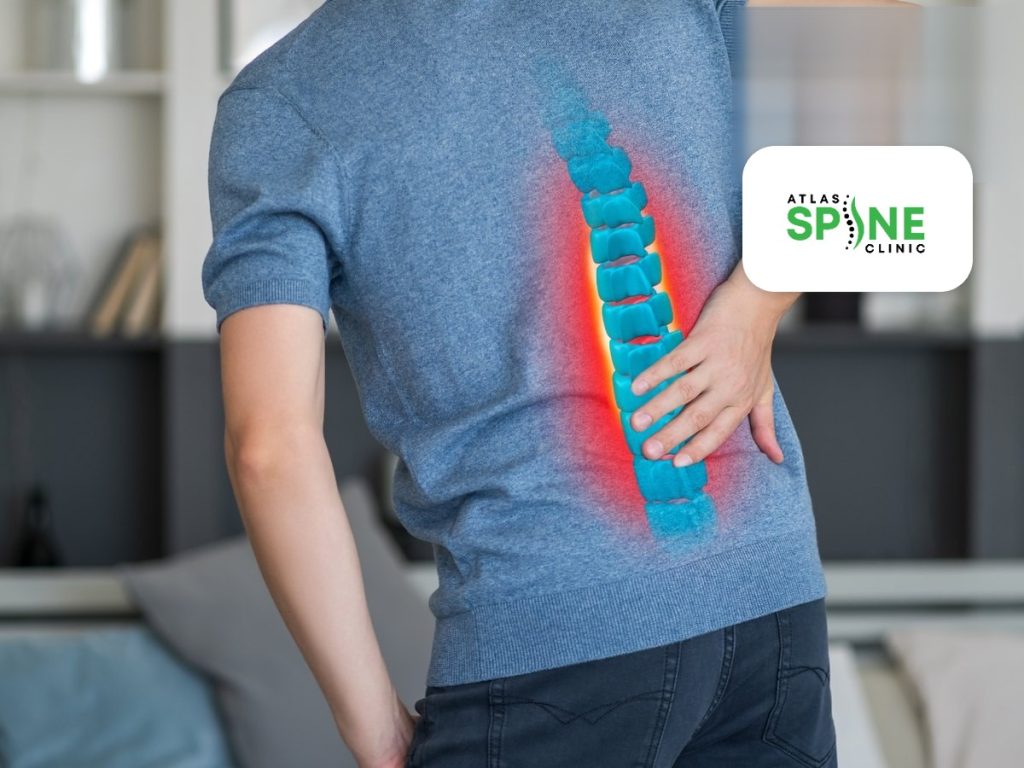
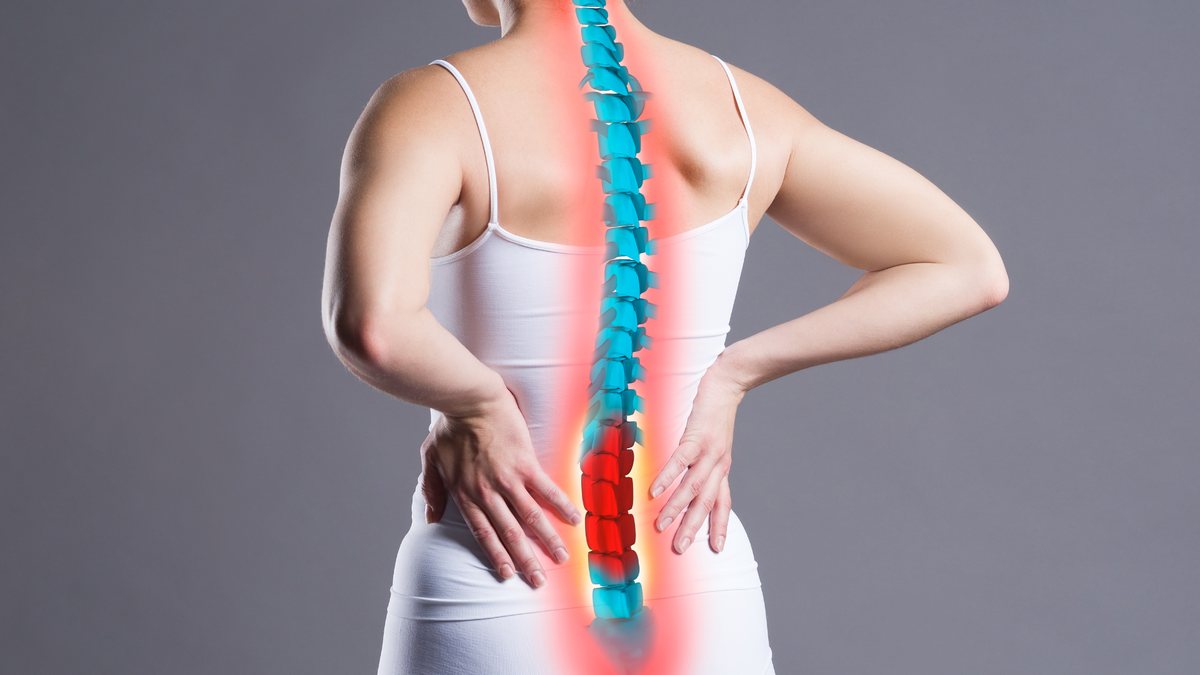
This is the single most important thing to understand, and it changes how you treat it. Sciatica is not a condition in itself. It is a symptom of a compressed or irritated nerve, most commonly caused by a herniated disc or spinal stenosis in the lower back. The nerve gets pinched at the spine, and the pain shows up down the leg because that is where the nerve travels.
According to the Mayo Clinic, sciatica affects up to 40 percent of people at some point in their lives, so if this is you, you are in very common company. The trouble is that the leg is only the messenger. If the pressure on the nerve at your spine is left alone, the leg keeps hurting no matter what you rub, stretch, or medicate.
That is why a real plan starts by finding the source in your back, not by chasing the pain down your leg.
Why rest, painkillers, and stretching keep failing
Look at what each of those common fixes actually does, and the problem becomes obvious.
Rest calms an angry nerve for a while, but it does nothing to take the pressure off it, so the pain returns as soon as you are active again. Painkillers and anti-inflammatories mask the pain, which can be a reasonable short-term help, but they do not touch the disc or the narrowing that is causing it. And stretching, done aggressively or with the wrong movements, can actually pull on a nerve that is already irritated and make a flare worse.
The honest through-line is that most people arrive having done a little of everything, none of it aimed at the actual driver. Relief comes from reducing the pressure on the nerve and rebuilding the support around it, not from quieting the symptom and hoping.
How we treat sciatica at Atlas Spine Clinic
There is no single fix, and the right plan depends entirely on what is causing your nerve compression, which is why every plan starts with a proper assessment of your history, symptoms, posture, and movement. From there, we combine treatments rather than relying on one, because a combined approach usually produces faster and more lasting results.
As a spine-focused clinic, the structural centrepiece for disc-driven and stenosis-driven sciatica is often lumbar decompression therapy. It uses a computer-controlled table to apply a gentle, precise, intermittent stretch to the lower spine. That controlled traction creates negative pressure inside the disc, a light vacuum effect, which encourages bulging or herniated disc material to retract away from the nerve, and at the same time draws water and nutrients back into the disc to support healing. The intermittent, cyclic nature of the pull matters, because it stops the muscles from guarding and tensing against it. One clinical study, published in the Journal of Neurological Research, found that nonsurgical spinal decompression produced greater improvement in leg pain and function than a control group, with MRI-confirmed shrinkage of herniated disc volume by nearly 30 percent. That is one study rather than settled consensus, but it is a real, measured result.
Decompression rarely works alone, and it is not right for everyone. Depending on what the assessment finds, we build a plan around it: chiropractic care to restore normal joint movement in the lower back, physiotherapy and targeted exercise to rebuild the strength and stability that keep the nerve from being compressed again, and soft tissue therapy, acupuncture and electro-acupuncture, and modalities like IFC or shockwave to settle pain and help stubborn cases along.
What decides the path is the assessment. A picture that points to a disc or nerve compression leans toward decompression-led care, while a more muscular or purely mechanical picture leans on chiropractic, physiotherapy, and soft tissue work. It is not a menu you pick from; it is a plan built around your spine.
How long does it take? The honest answer
Improvement is usually gradual, and many people notice meaningful relief within the first several sessions. A full course of decompression care typically runs 12 to 20 sessions over several weeks, and the timeline depends on how severe your case is, how long you have had it, and your overall health.
Two honest points are worth saying plainly. First, consistency is what produces the best outcomes, so the people who recover well are the ones who attend the full plan rather than stopping the moment the sharp pain eases. Second, this is not meant to be forever. The goal is enough structural improvement that your condition resolves or stabilizes, and many patients complete a course of treatment and do not need ongoing sessions, especially when they keep up the supportive exercises afterward.
We will not attach a fixed success percentage to your case, because your spine is not a statistic. What we can tell you at the assessment is what is driving your sciatica and roughly what your timeline looks like.
When it is not simple sciatica, and when to see a doctor
Part of a good assessment is ruling out the things that are not ordinary sciatica, because a few of them are serious.
Some warning signs are a medical emergency, not a reason to book a clinic. If you have loss of bladder or bowel control, numbness in the saddle or groin area, or rapidly worsening weakness or foot drop in the leg, go to a hospital, because these can signal a rare but serious condition called cauda equina syndrome that needs urgent care.
Other leg pain only looks like disc-related sciatica. It can turn out to be a muscular referral such as piriformis irritation, a hip joint problem, poor circulation causing leg pain when you walk, or nerve pain from diabetes. Pain that follows a significant injury, or that comes with fever, unexplained weight loss, or a history of cancer, deserves imaging and medical assessment first.
Lumbar decompression itself is also not right for everyone. It is generally not recommended during pregnancy, or for people with severe osteoporosis, spinal fractures, tumours, or instability, prior spinal fusion at the affected levels, or certain implanted spinal hardware. This is exactly why the assessment comes first: it exists to catch the cases that are something else, or that need a different plan.
Who we see for this in Scarborough
Sciatica has a pattern, and a lot of it comes down to how the lower back gets loaded day after day. The people we see most for this in Scarborough tend to be desk workers with long commutes and hours of sitting, which is one of the most reliable ways to load a disc, along with drivers and delivery workers who sit for a living, and warehouse, manufacturing, and trades workers whose jobs involve lifting, bending, and twisting. Add older adults, where spinal stenosis becomes more common with age, and you have most of who walks in with it.
If that sounds like you, you are not doing anything wrong. You are simply in the group whose daily demands put pressure on the lower spine, and that is treatable.
Ready to deal with the cause, not just the leg pain?
Atlas Spine Clinic is a spine-focused clinic in Scarborough, established in 2019 and led by Dr. Arvin Sepahdoost, and we welcome patients from Scarborough, Toronto East, and throughout the Greater Toronto Area. We have evening hours and Saturday appointments, and many extended health plans cover this care when it is provided by a chiropractor or physiotherapist, with our team helping you with the paperwork for your claim.
The honest first step is an assessment to find what is actually compressing the nerve, so the plan targets your spine and not just the pain in your leg. If your sciatica has lasted more than a week, keeps coming back, or is interfering with work or sleep, that is the time to have it looked at.
Book a free 15-minute consultation or call (647) 794-6868. New to this kind of care? Here is what to expect at your first visit.
Not sure if a disc is behind your pain? See our guide to herniated disc treatment in Scarborough and the non-surgical options that help.
